SwapEasy
B2B2C Platform
Re-commerce
Enterprise SaaS
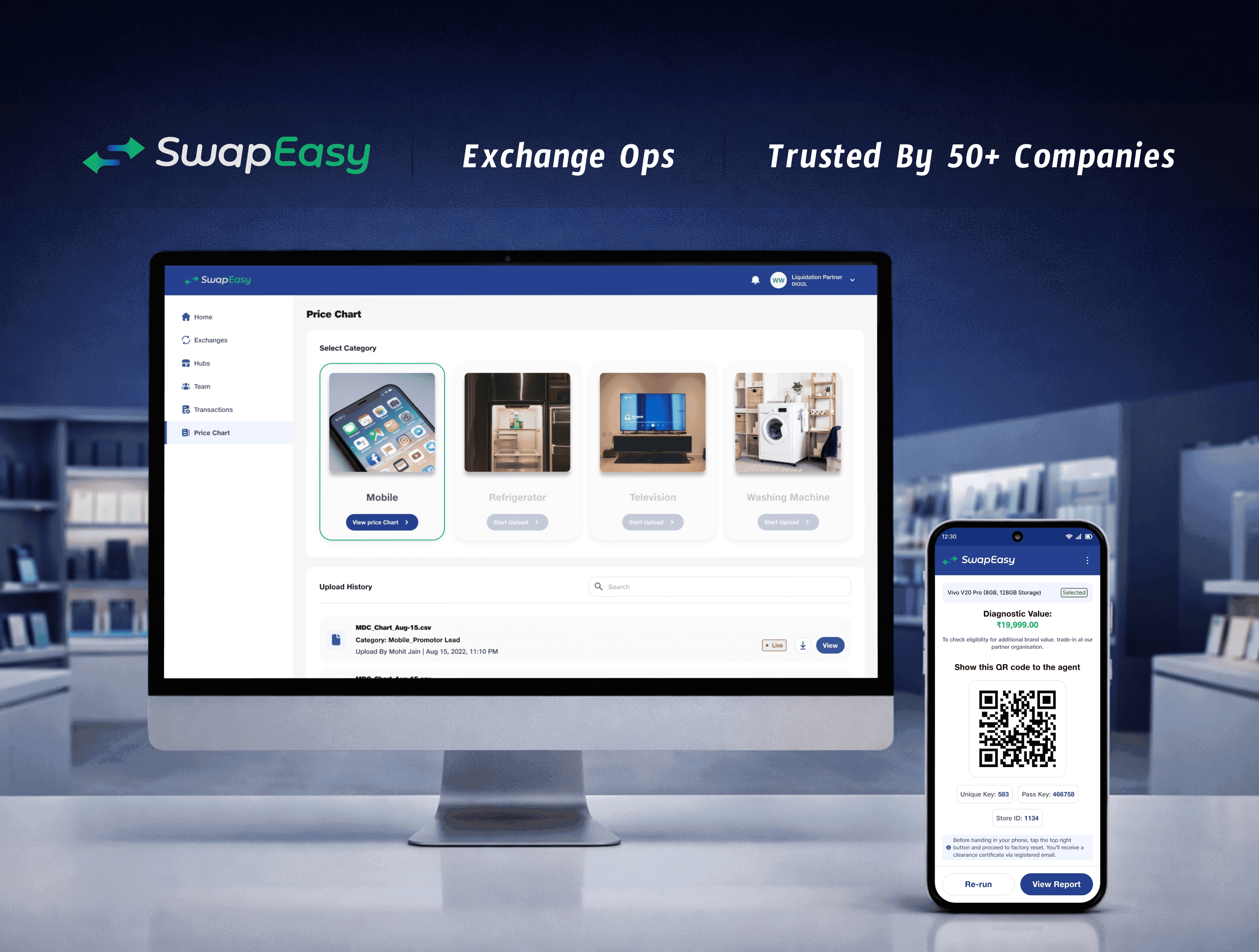
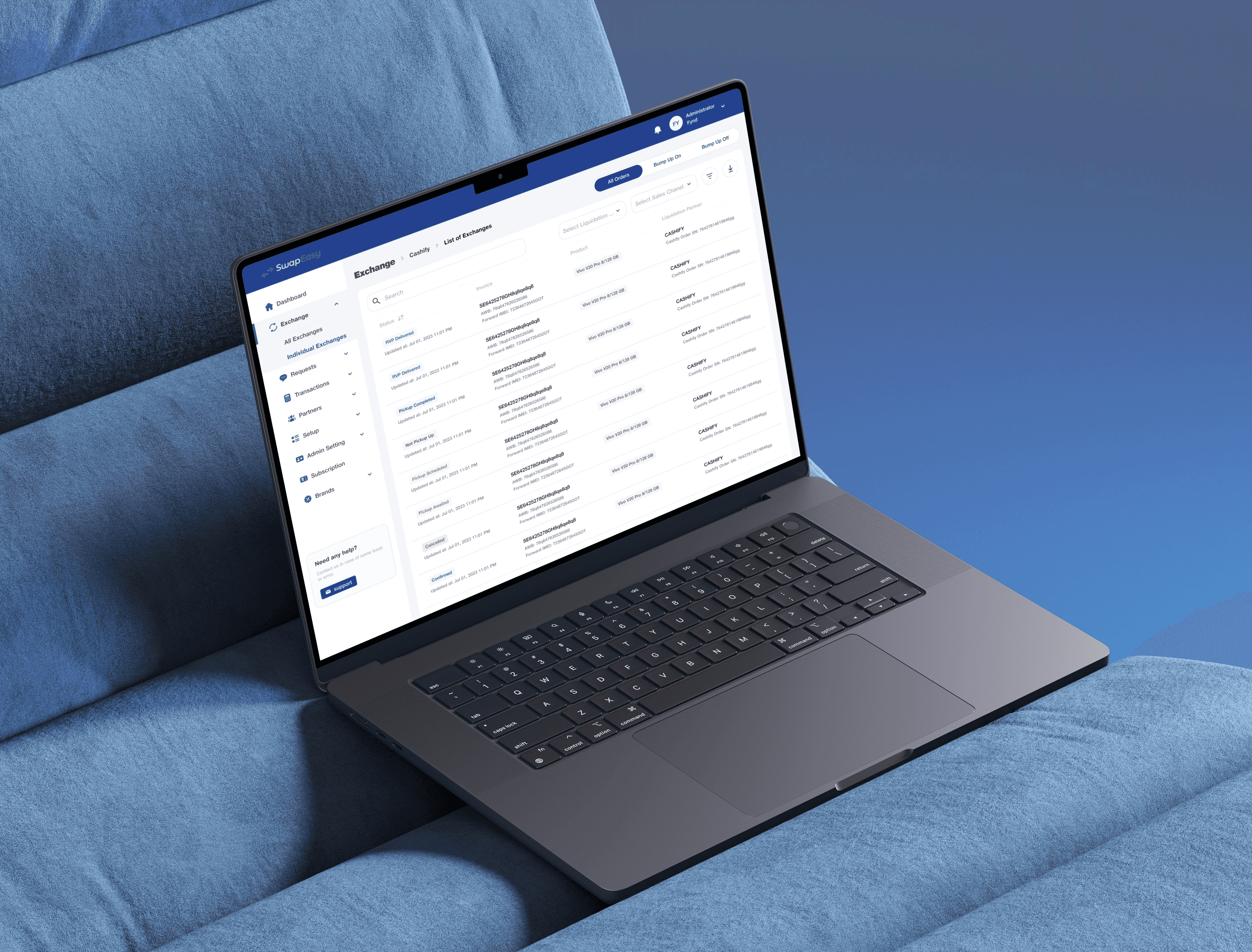
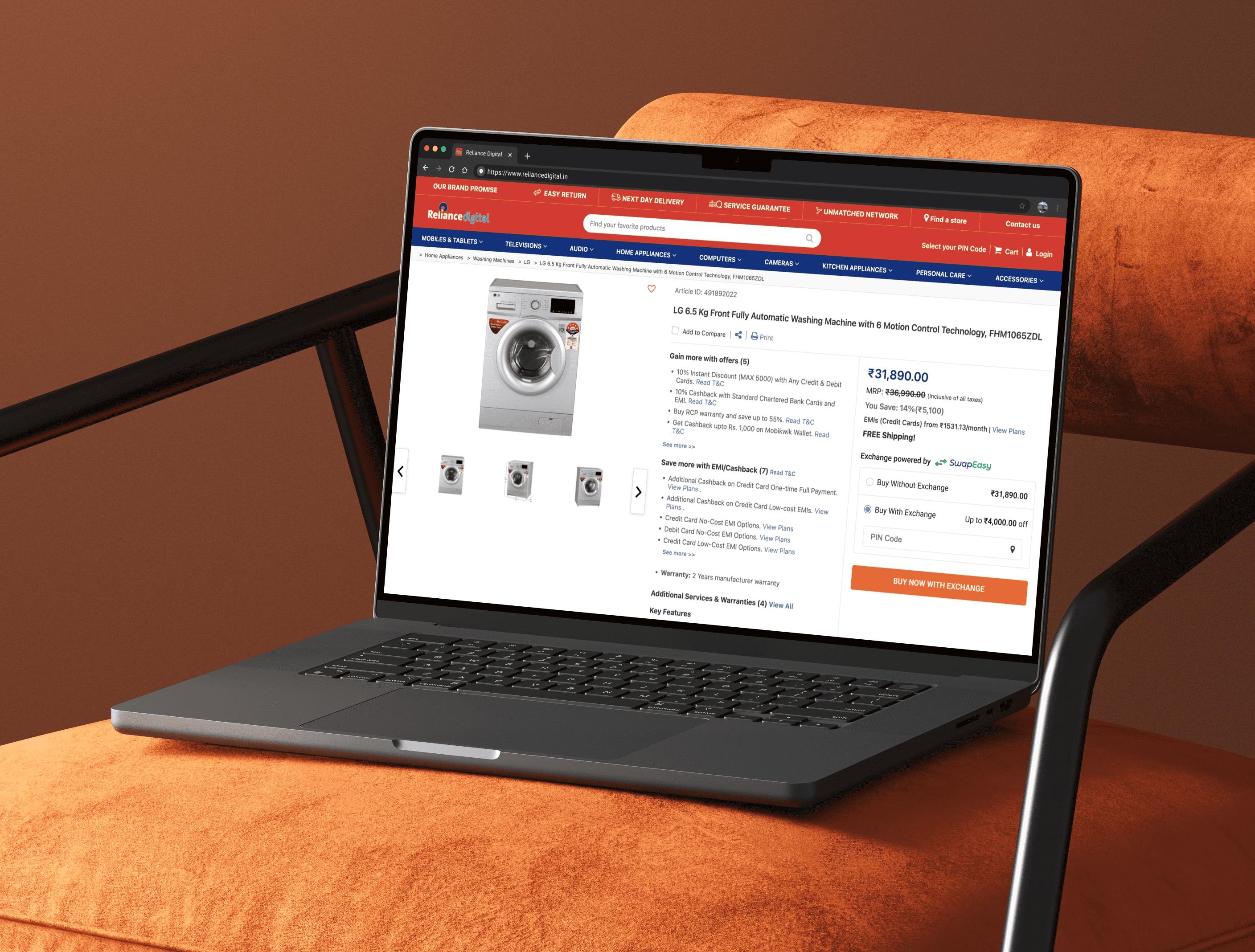
Designed SwapEasy’s zero-to-one exchange experience across 625 Reliance Digital stores. The rollout handled 1,000+ exchanges worth ₹1.5 Cr+.
Year
2022 - 2023
Services
End-to-end Product Design, Enterprise UX, B2B SaaS Architecture, Reverse Logistics Design, System Design

Context & Market Gap
India's electronics exchange market is enormous—millions of devices (smartphones, TVs, washing machines, refrigerators) change hands every year. While trade-in looks seamless in a B2C checkout widget, the operational reality behind it was stuck in the analogue era.
It's a chaotic multi-party system: Customer ↔ Store ↔ Delivery Partner ↔ Diagnostics ↔ Liquidation Partner ↔ Pricing ↔ Settlements. Before SwapEasy, pricing was inconsistent, logistics were juggled across WhatsApp groups, and buyer discovery relied on manual spreadsheets.
SwapEasy was built to bridge this gap. It serves as a master orchestration engine, digitising a fragmented marketplace by connecting enterprise retailers (like Reliance Digital) with a verified network of second-hand liquidation buyers to streamline exchange journeys (exchange old device → buy new device) and run the operational layer behind it.
At a glance
Scale: Operational across Reliance Digital and JioMart, with the platform trusted by 50+ companies across India.
My Role: Solo & Lead Product Designer (0 → 1). I owned everything from the brand identity to the UX architecture of two separate console experiences, driving the product from initial concept to a live enterprise platform.
Problem (Two broken sides of a marketplace)
The business lacked operational leverage, and users lacked trust. I framed the problem around two underserved user groups:
Organisation Admins (Retailers): Managed 20–50 transactions a week manually. Inconsistent pricing damaged customer trust, delayed pickups led to deal drop-offs, and there was zero real-time visibility into the exchange pipeline.
Buyer Partners (Refurbishers/Recyclers): Needed a reliable pipeline of quality-checked inventory sourced from brands they could trust. The existing process forced them to build individual, manual relationships with each retailer with no standardisation in grading or pricing.
SwapEasy’s mandate was to make exchange reliable at scale—across eCommerce + stores, with a model that could expand to multiple partners and categories over time.
Users & Jobs-to-be-done
I designed for five primary actor groups:
Customers (Reliance Digital web/app): get an exchange quote, complete purchase without ambiguity.
Store staff & ops teams: monitor exchange performance, exceptions, and partner execution.
Delivery partners: perform doorstep pickup and assessments with structured checks.
Liquidation partners: bid/accept inventory, manage payouts, operate within compliance constraints.
Brand & channel managers: control price charts, bump‑ups, rules, and publish schedules.
During discovery, I spoke with delivery partners and Reliance stakeholders to understand the exchange workflow and establish the product’s foundations. Three things stood out: pricing disputes happened at the doorstep because the delivery partner and customer had seen different quoted values; liquidation partners were walking away from deals because onboarding took weeks; and ops teams had no single source of truth — every exception was handled in a WhatsApp thread. Those three failure points became the three pillars of the architecture.
Architecture & Strategy
My core insight during discovery became the north star for the project: Trust is the product. Every design decision needed to answer: Does this give the user confidence to take the next step?
The Dual-Console Architecture Decision The most consequential structural decision I made early on was pushing back against engineering's instinct to build a single, shared interface with role-based permissions. Merging conflicting mental models would have created a cluttered mess. Instead, I split the platform into two distinct console experiences:
Organisation Console: Focused on exchange lifecycle management, customer registration, and partner settlement.
Buyer Partner Console: Focused on inventory sourcing, price charts, and hub setups.
What I optimised for:
Determinism over cleverness: pricing + grading must be predictable and explainable.
Governance baked into UX: approvals, publish windows, audit trails—not “admin afterthoughts.”
Configurable primitives: checks, grading, coverage, channels, and partners needed modular configuration.
Fast exception recovery: when something breaks (coverage mismatch, doc missing, value dispute), the UI must route to resolution—quickly.
Solution overview (what we built)
SwapEasy gives 50+ companies a way to track and manage the exchange process from a single platform, designed to integrate into an existing eCommerce/business website.
1) Partner Onboarding & Management
Exchange programs succeed or collapse here. I treated partner onboarding as a critical product surface, not a back-office form.
Delivery Partners: Built intuitive dashboards with pincode-level coverage mapping (critical for serviceability and SLA alignment).
Liquidation Partners: Designed a secure onboarding flow capturing KYC, tax, and virtual accounts with strict approve/reject governance.
Why this mattered: liquidation isn’t “a vendor.” It’s the downstream value engine. If onboarding is slow or messy, exchange value collapses or becomes risky.
2) Pricing Governance (The Financial Brain)
SwapEasy explicitly calls out ops controls like price chart, sales channels, zones, pincodes.
I designed pricing as a controlled publishing pipeline, not a static config.
Key capabilities:
Online vs Offline mode (pricing can differ by channel).
Sales channel ↔ zone mapping (pricing relevance depends on where the order originates).
Upload → preview → validate → publish with error gating.
Support for large tables (thousands of rows) without UI degradation.
Tradeoff I made: we prioritised operational correctness (validation + publish windows) over “instant edits,” because bad pricing is worse than slow pricing.
3) Master Setup (The Data Foundation)
Exchange systems fail when the base data is wrong (model mappings, identifiers, compatibility).
I designed the Master Setup flow to support:
CSV imports with clear completion state, versioning, and validation feedback.
Searchable, paginated tables so ops teams can verify “truth” quickly.
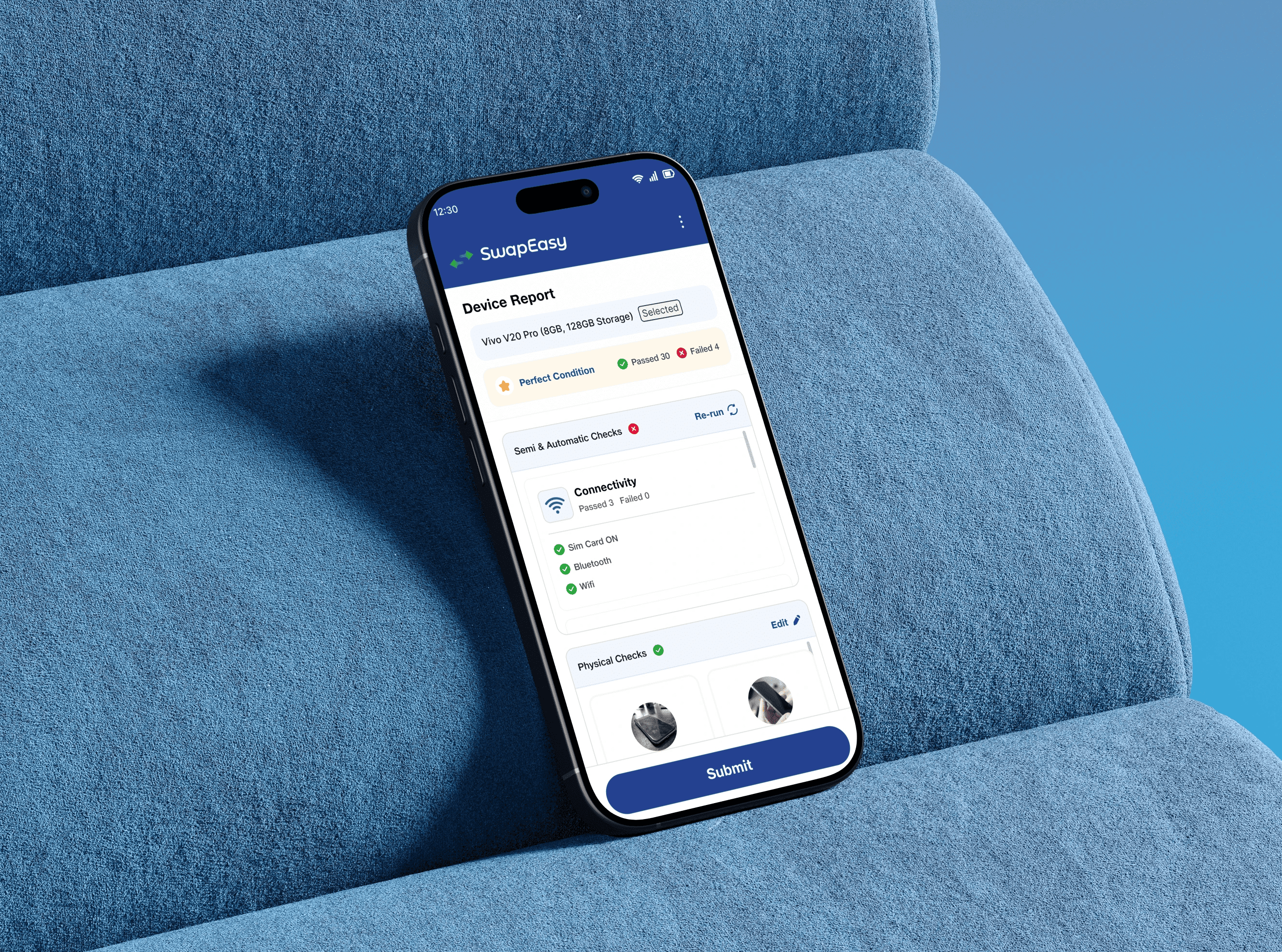
4) Guided Diagnostics Engine
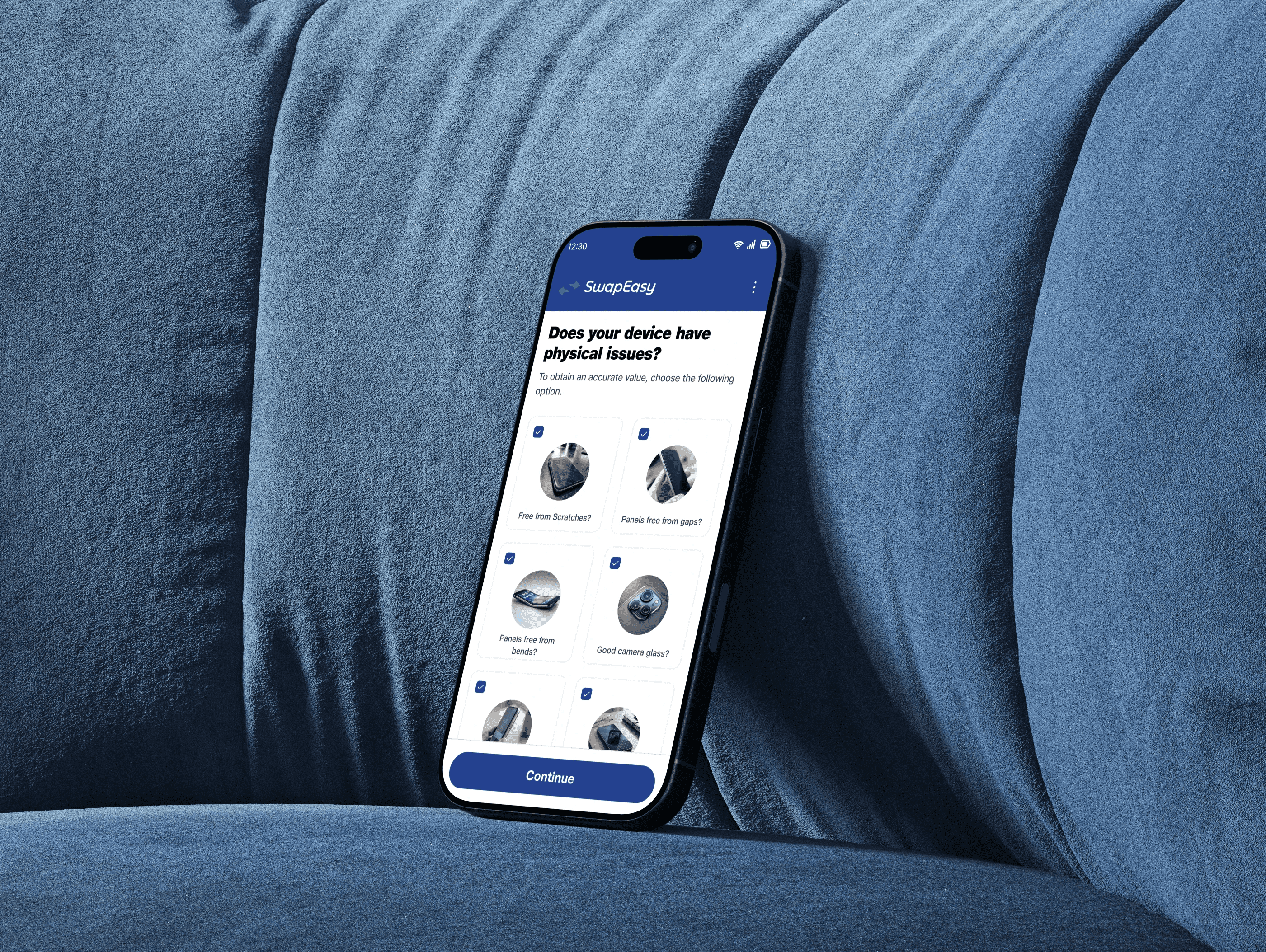
To solve the trust deficit, I designed a diagnostics configuration system with two layers:
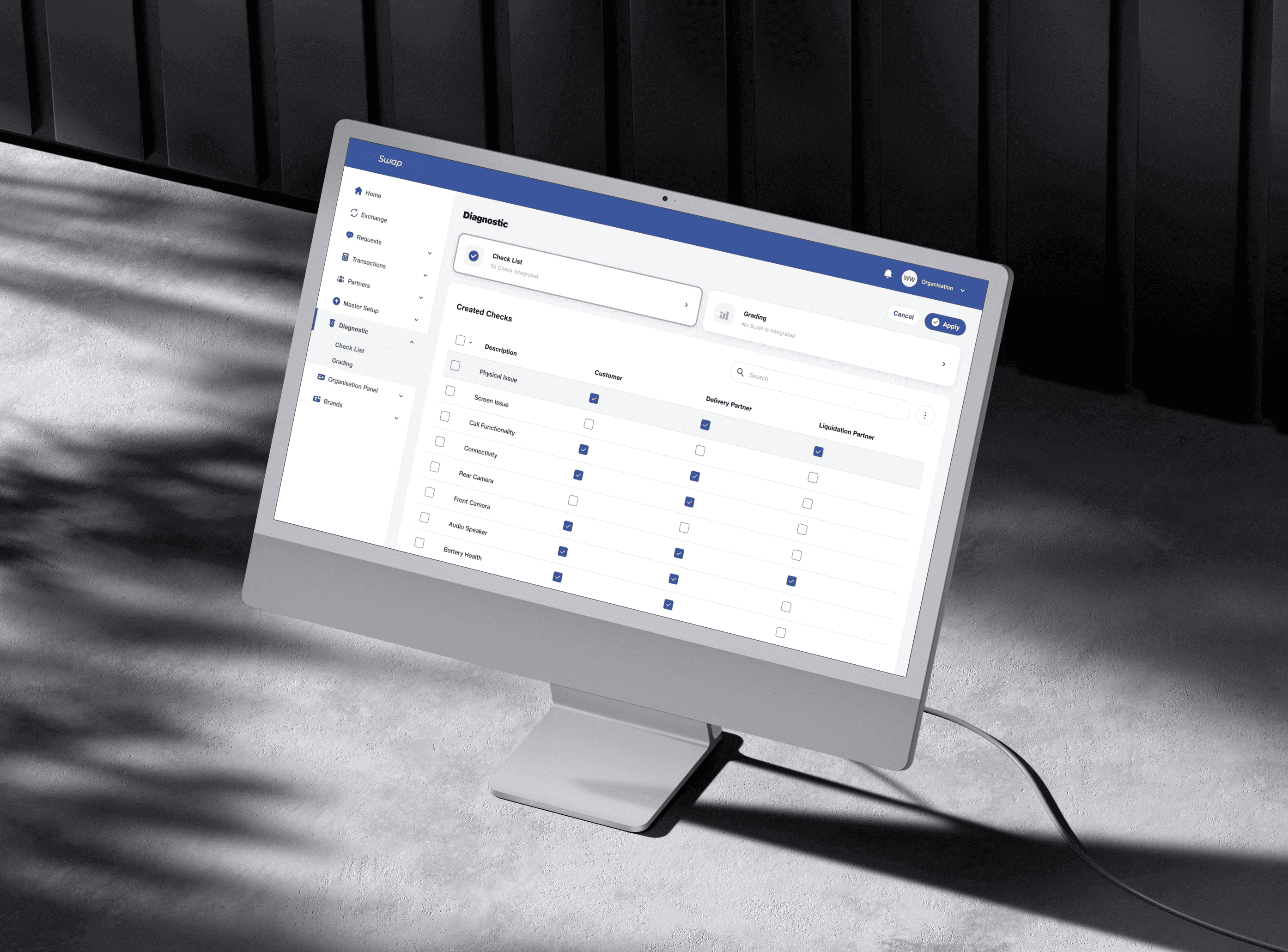
The Checklist Matrix: A configurable library of checks explicitly mapped to the customer vs. delivery partner vs. liquidation partner to prevent mismatched expectations.
Grading Model: Standardises how a device's condition maps to value tiers (Grade A/B/C).
Design call I made: I kept diagnostics configurable but bounded—ops can tune checks and roles, but not create ungoverned chaos.
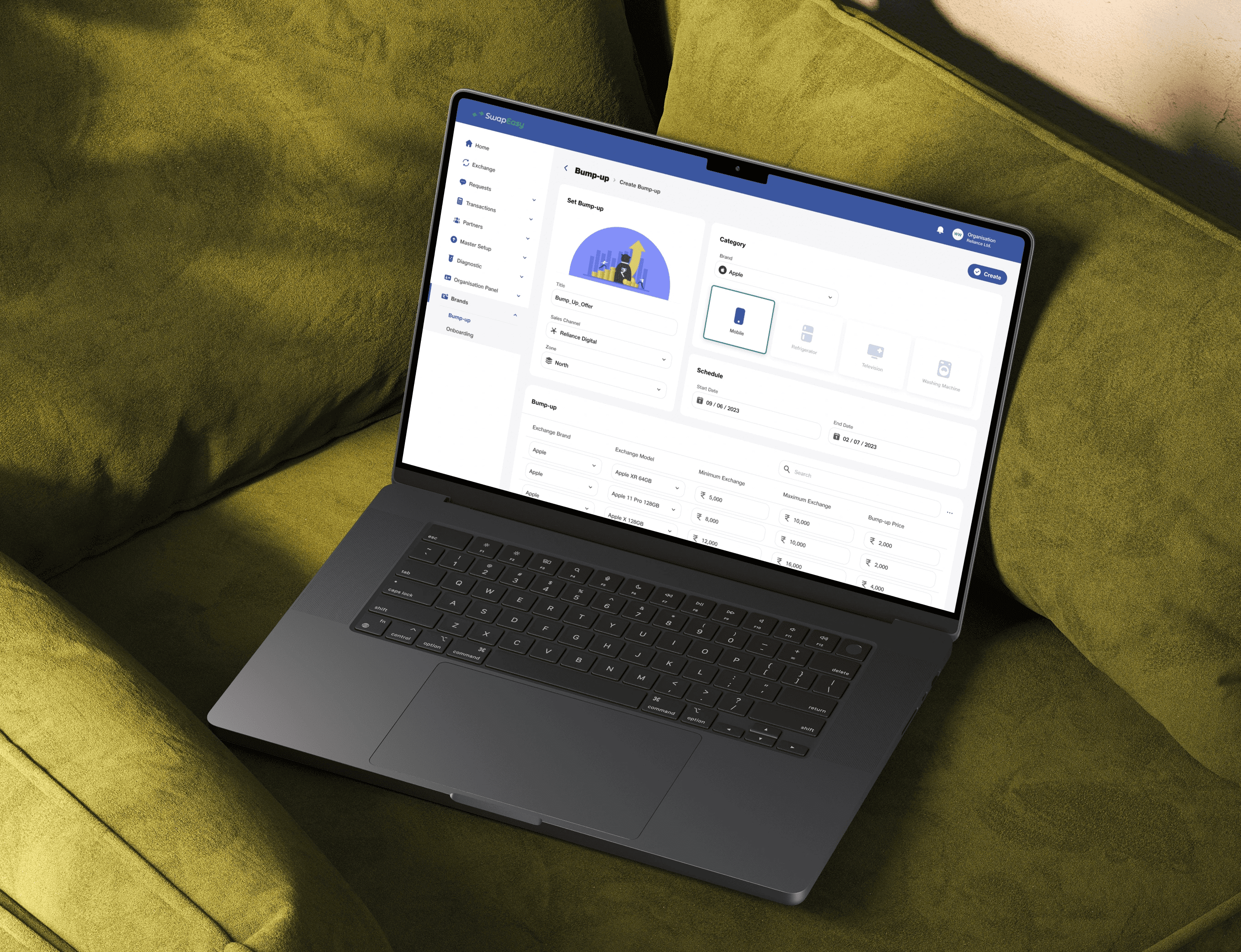
5) The "Bump-Up" Transaction Layer
SwapEasy describes Bump‑up as an instant extra discount value from brands.
In practice, Bump‑up required transaction governance:
A filterable transaction log (date range, liquidation partner, sales channel).
Bulk upload support for operational scale.
Clear identifiers (order IDs, article IDs) to reconcile downstream.
6) Organisation + Partner Panels
SwapEasy is a multi-actor ecosystem. I designed panels to enforce:
Who can configure vs who can execute
Approvals where risk exists (partners, banking, sensitive edits)
A UI that scales as organisations add partners, channels, and zones
Impact & Business Value
SwapEasy didn't just digitise a broken process—it unlocked massive financial throughput and operational scale for India's largest retailer. Reliance Digital’s first-month snapshot and broader product adoption show that scale:
Massive Financial Throughput: Processed ₹1.5 Cr+ in exchange value across 1,000+ transactions.
High-Value Exchanges: Recorded an average exchange value of approximately ₹14,000 per transaction.
Omnichannel Footprint: Live across 625 Reliance Digital stores, bridging the offline-to-online reverse logistics gap.
Ecosystem Adoption: Beyond that rollout, SwapEasy is trusted by 50+ companies across India.
Commerce Integration: Designed exchange journeys for retailers to integrate into their existing eCommerce systems.
Read the story about how Reliance Digital completed 1k+ exchange transactions in a month with SwapEasy here
What to improve next
Dispute resolution UX: guided resolution flows with evidence trails (photos, checks, timestamps).
Pricing anomaly detection: flag abnormal value swings by zone/channel before publish.
Partner scorecards: SLA + rejection reasons + variance vs expected grading to optimise the network.
If I were doing this again, I'd design dispute resolution into V1 — not the next roadmap. Post-launch, value disputes between delivery and liquidation partners turned out to be the highest-friction point in the system, and we had no structured flow to handle them.