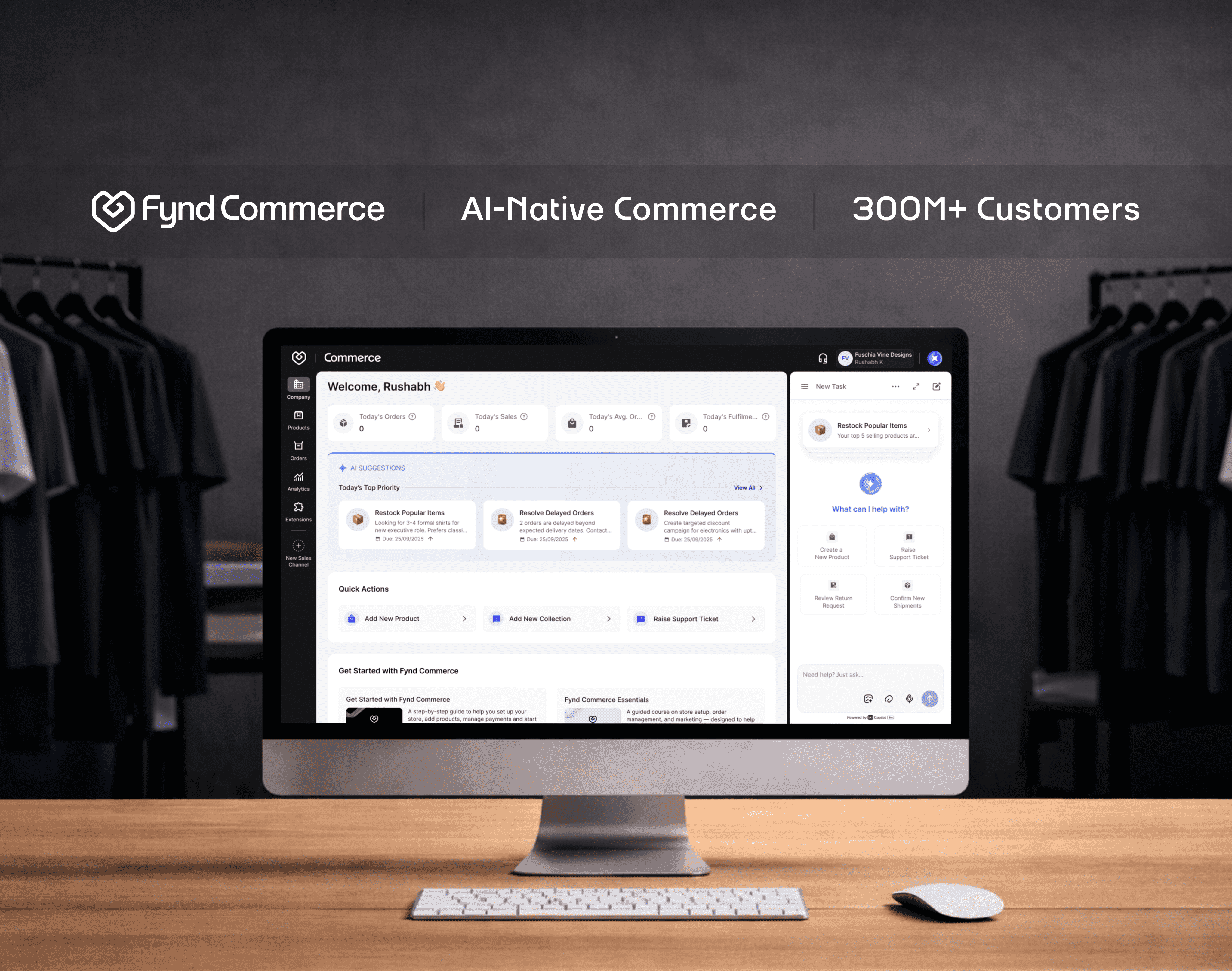
JioMart Digital B2B
B2B eCommerce
Retail Ops
Storefront
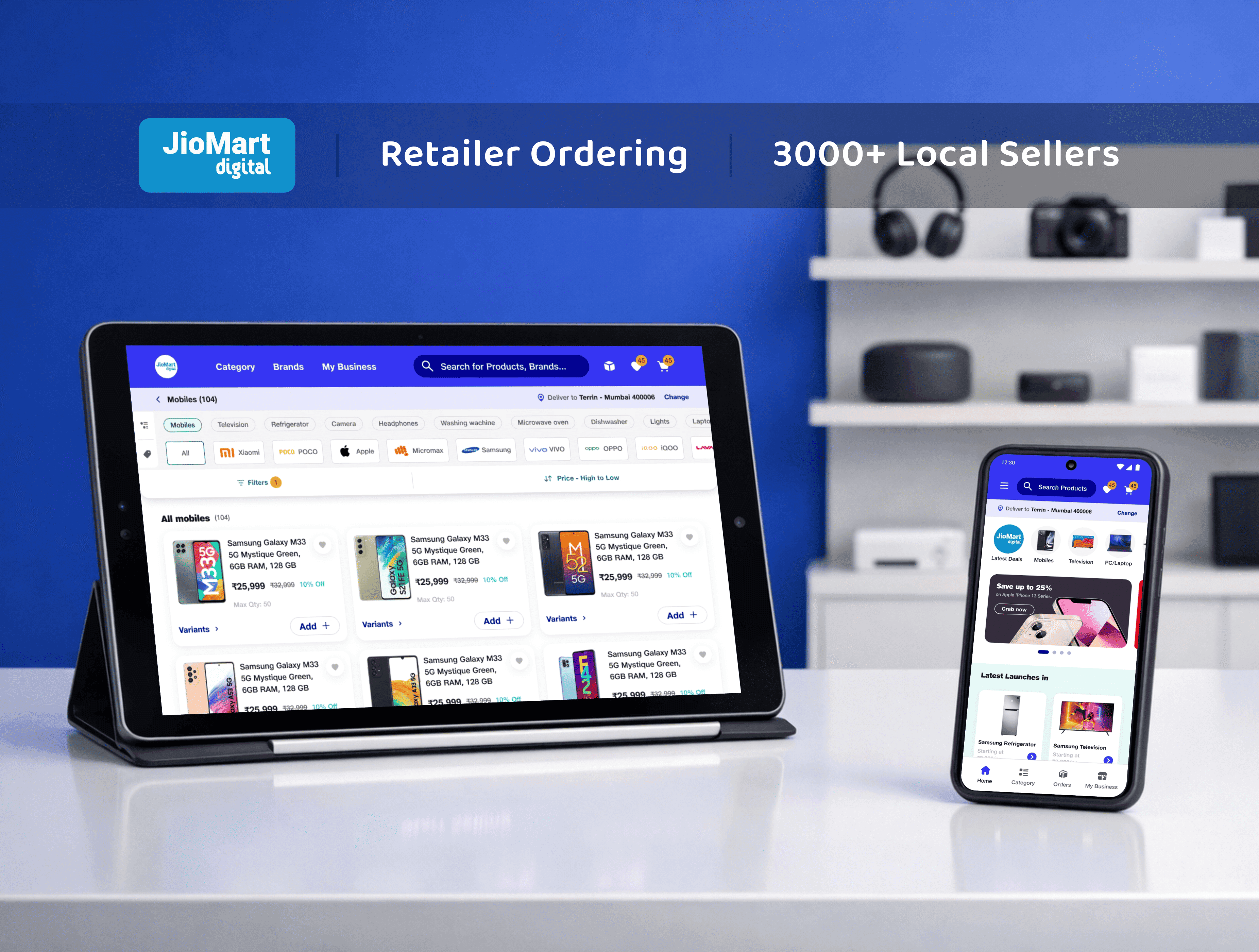
Designed end-to-end B2B procurement for 3,000+ electronics retailers across mobile and tablet—from bulk buying to order tracking and invoices.
Year
2022 - 2023
Services
End-to-End App Design (Mobile + Tablet), B2B UX Architecture, Omnichannel Strategy, Design QA
The Context & Market Gap
India’s consumer electronics market is driven by thousands of independent mom-and-pop retailers. Historically, these local store owners relied on fragmented distributor networks to source inventory. The process was slow, pricing margins were opaque, and stock availability was a constant guessing game.
JioMart Digital B2B (JMD) is a retailer partner program built to digitise this supply chain. The business intent was explicit: simplify retailer ordering and reduce their inventory risk while extending the trust of Reliance into a scalable digital workflow.
At a glance
The Scale: 3,000+ electronics retailers in the project scope. JMD B2B reported ₹381.5 Cr in revenue for June 2024, after the 2022–23 design project.
My Role: Product Designer at Fynd, leading design for this project. I owned the mobile and tablet experience, including information architecture, bulk-buying interactions, edge-case handling and engineering handoff specifications.
Collaboration: Partnered cross-functionally across Product, Engineering, Catalogue, Pricing, and Fulfilment to keep the experience “real-time enough” for strict inventory commitments.
Problem (What was breaking in the funnel)
The challenge extended beyond browsing: retailers needed to select bulk quantities, confirm variants, resolve stock changes, choose the correct business address and access invoices. I mapped the procurement journey around these points.
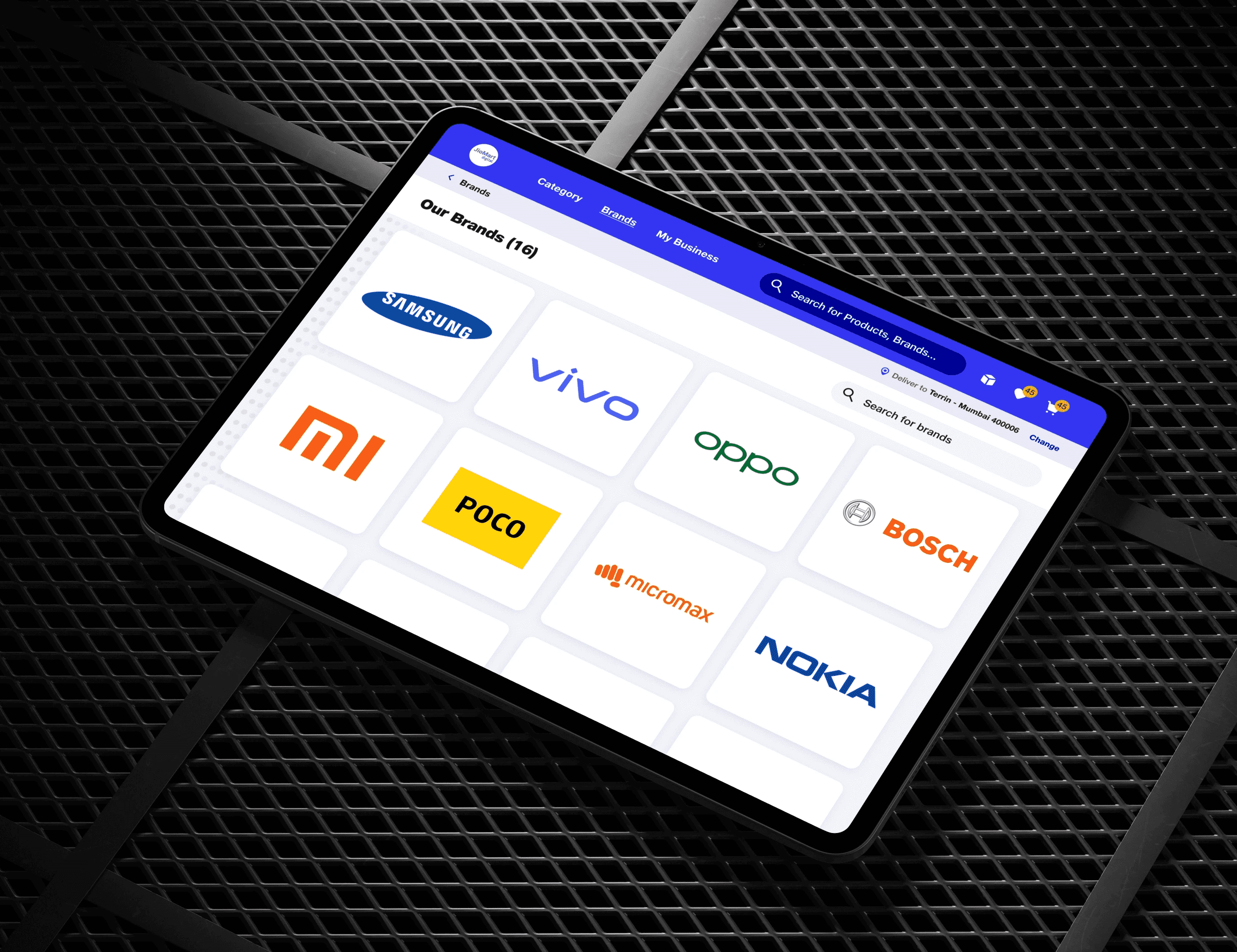
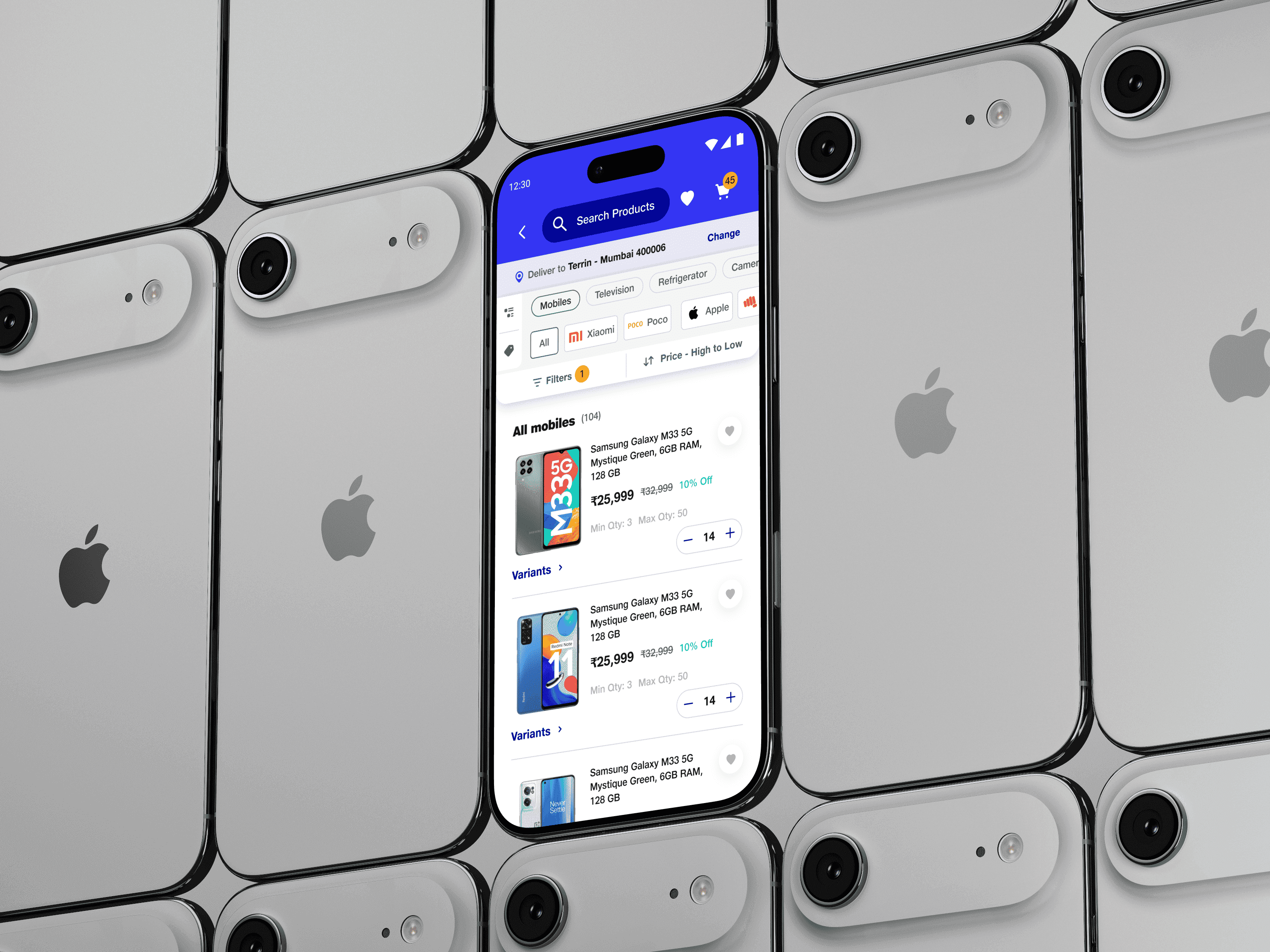
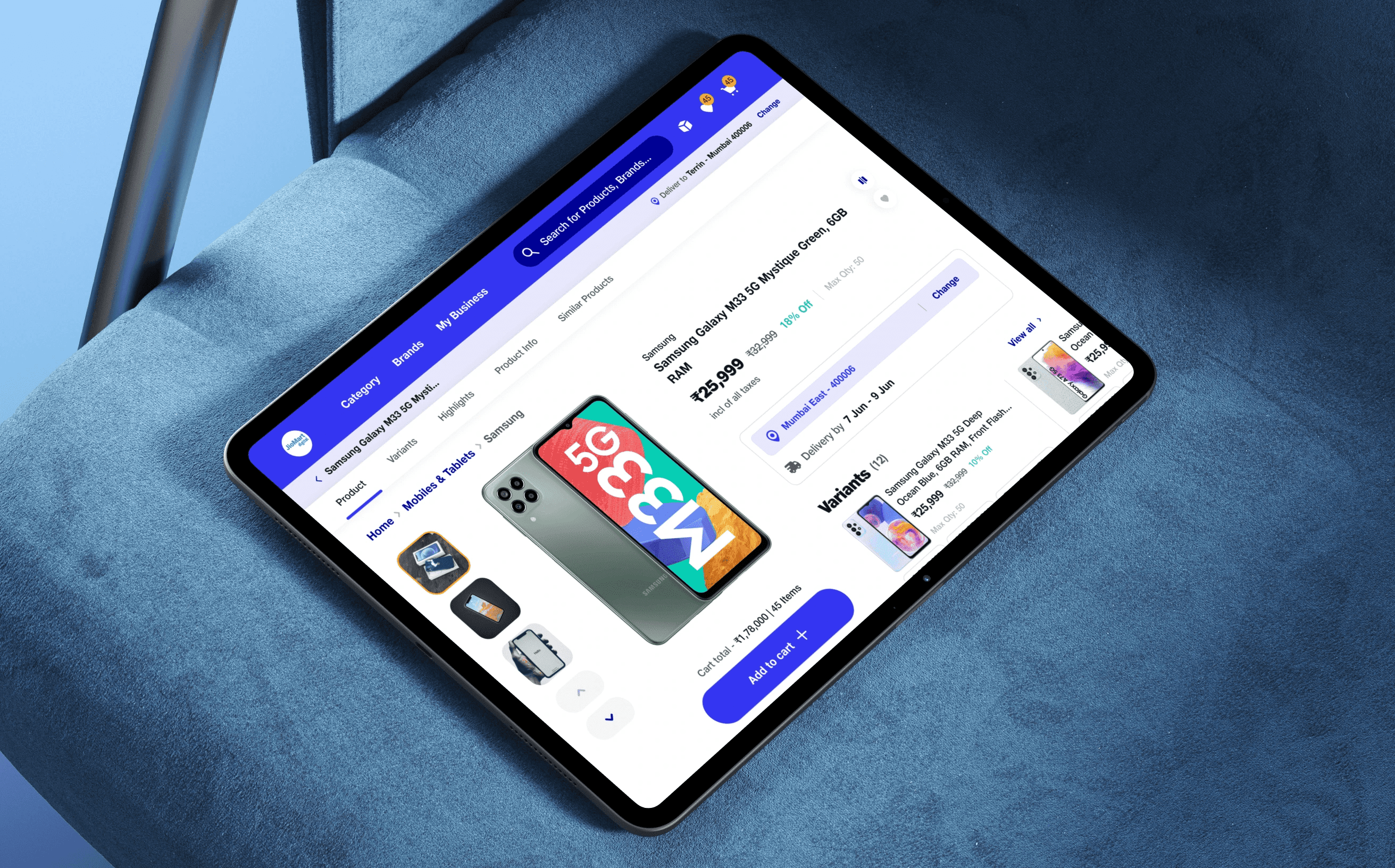
Discovery → PDP: Help retailers narrow dense catalogues with relevant filters.
PDP → Variant Selection: Make RAM, storage and colour differences explicit before selection.
Variant → Add to Cart: Support bulk quantities with controls suited to retailer ordering.
Cart → Checkout: Show stock changes and require unavailable items to be resolved before checkout.
Post-Order Ops: Make order status and invoices easy to find.
During discovery, we spoke with retailers to understand how they purchased stock for their businesses. Those discussions informed the focus on bulk buying, product comparison and clear ordering controls.
Design priorities
These priorities summarise the needs addressed by the design.
Registration: Make required business details clear.
Bulk ordering: Support efficient quantity selection and product comparison.
Order visibility: Make order status accessible in the app.
Invoice access: Make invoices easy to find after ordering.
Key Design Decisions
To solve this, I had to architect a “Consumer-Grade B2B” experience—making buying 50 smartphones feel as effortless as ordering a single t-shirt, while managing intense operational constraints.
1) Designing for bulk buying, not consumer shopping
B2B users don’t add “one item”—they add quantities.
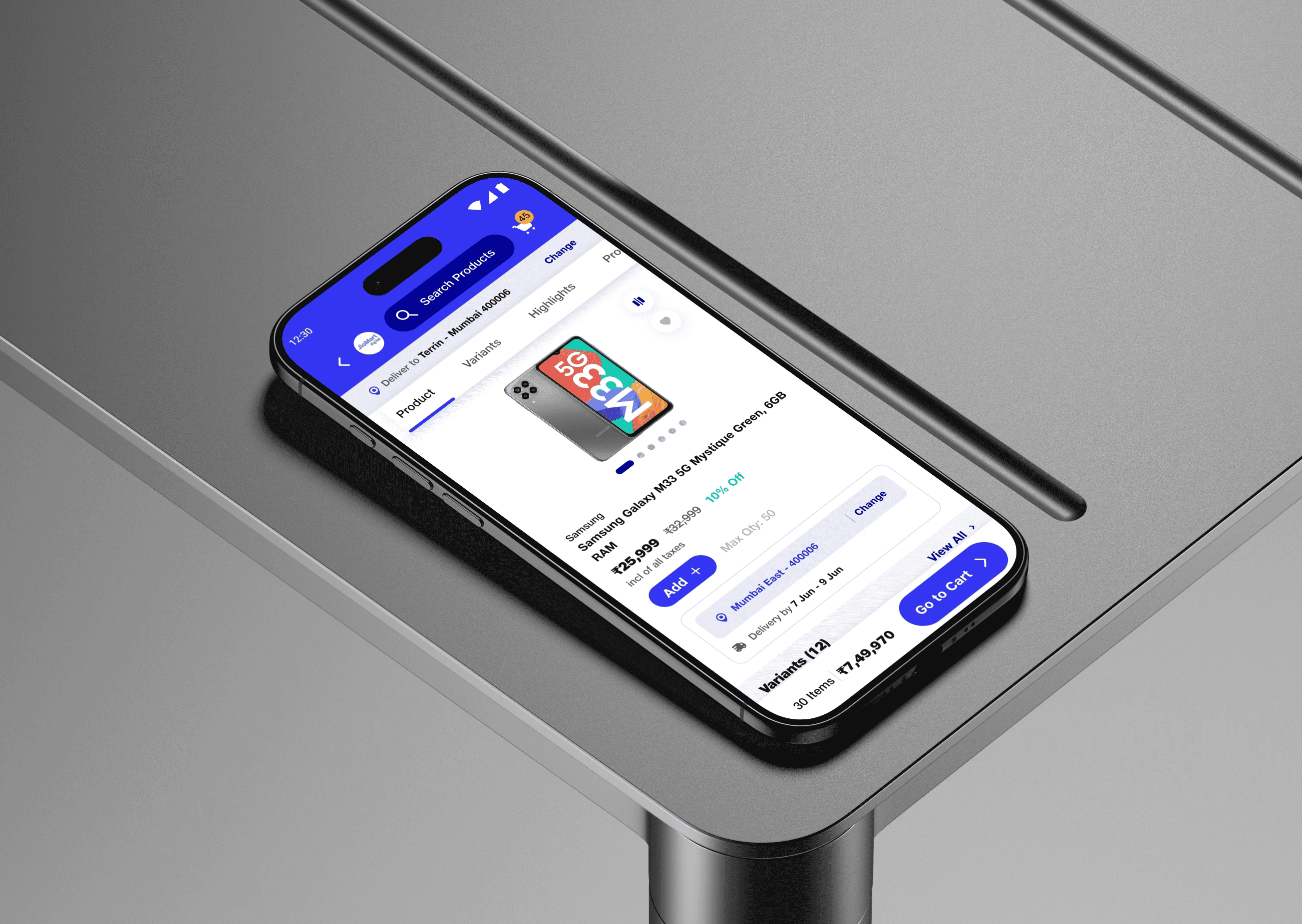
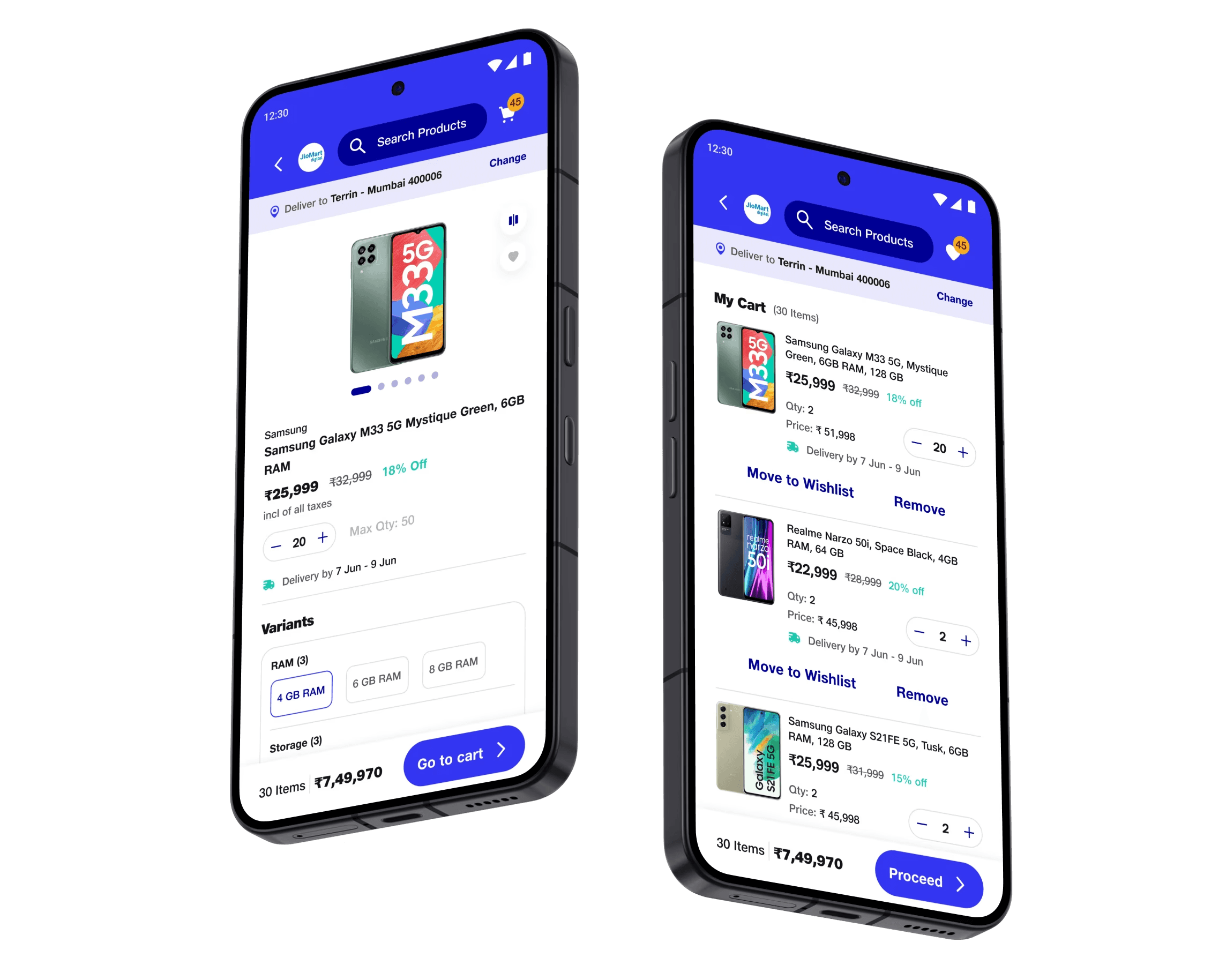
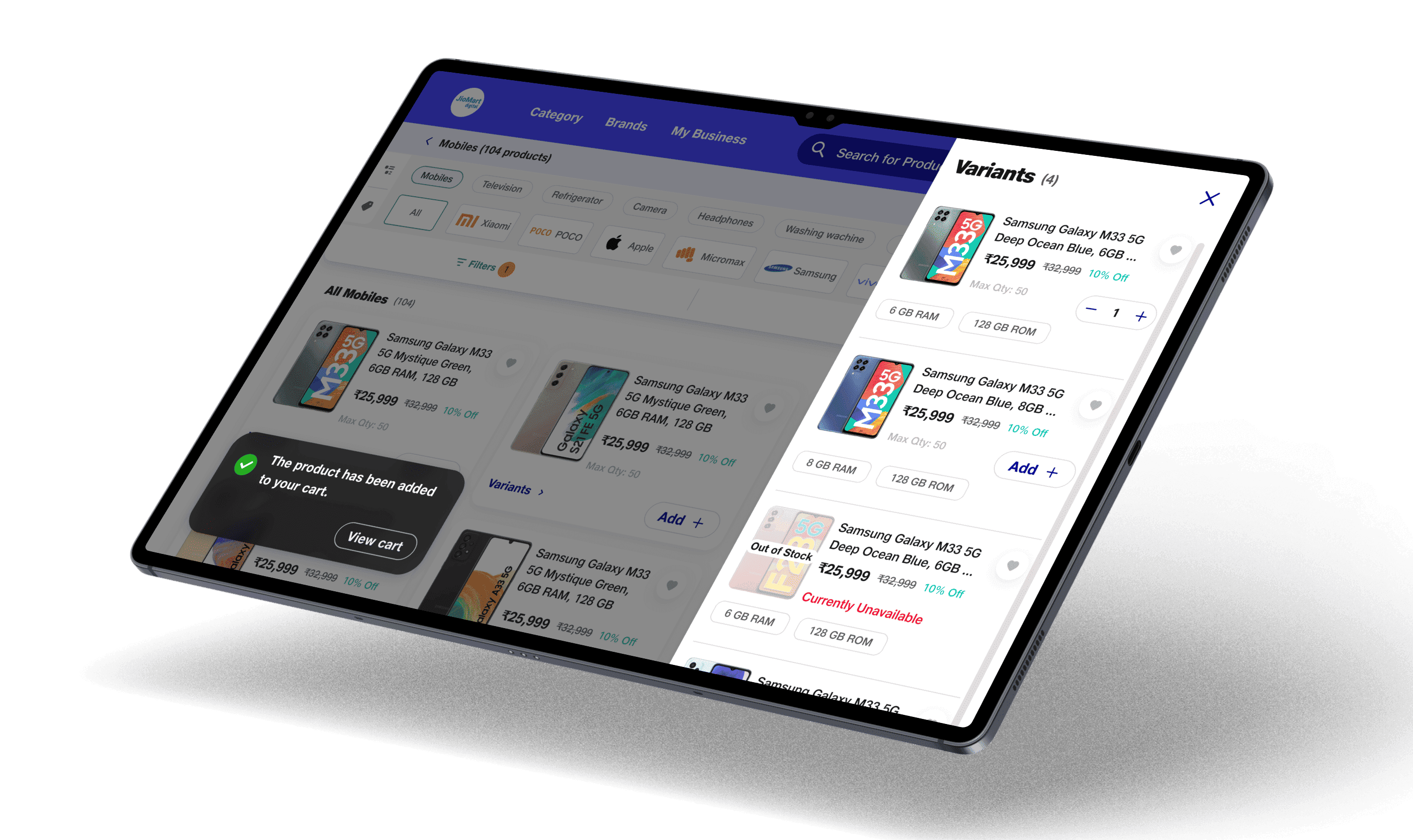
The Execution: I designed quantity steppers for fast increment and decrement, with visible maximum-quantity limits.
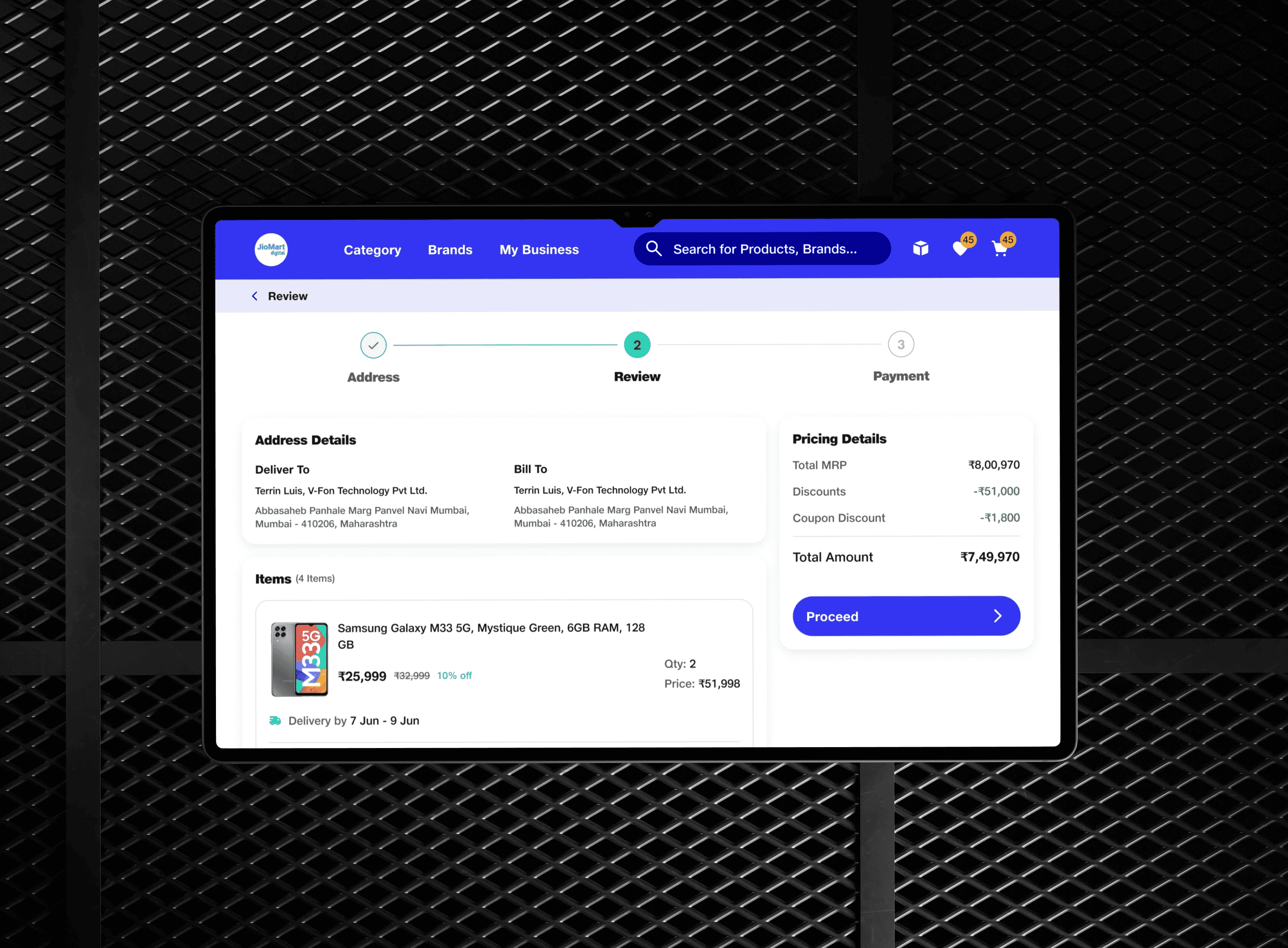
Visibility: Added a persistent, sticky bottom bar across the PDP and Cart (e.g., 30 Items | ₹7,49,970) so retailers could review the current order quantity and value while building their cart.
2) Making variants a first-class flow
Variants are where errors happen. Instead of hiding them in dropdowns, I used a dedicated variant surface.
The Execution: A streamlined matrix selector that allows quick comparison, makes out-of-stock (OOS) states explicit, and prevents “invalid adds” by removing actions on unavailable variants entirely.
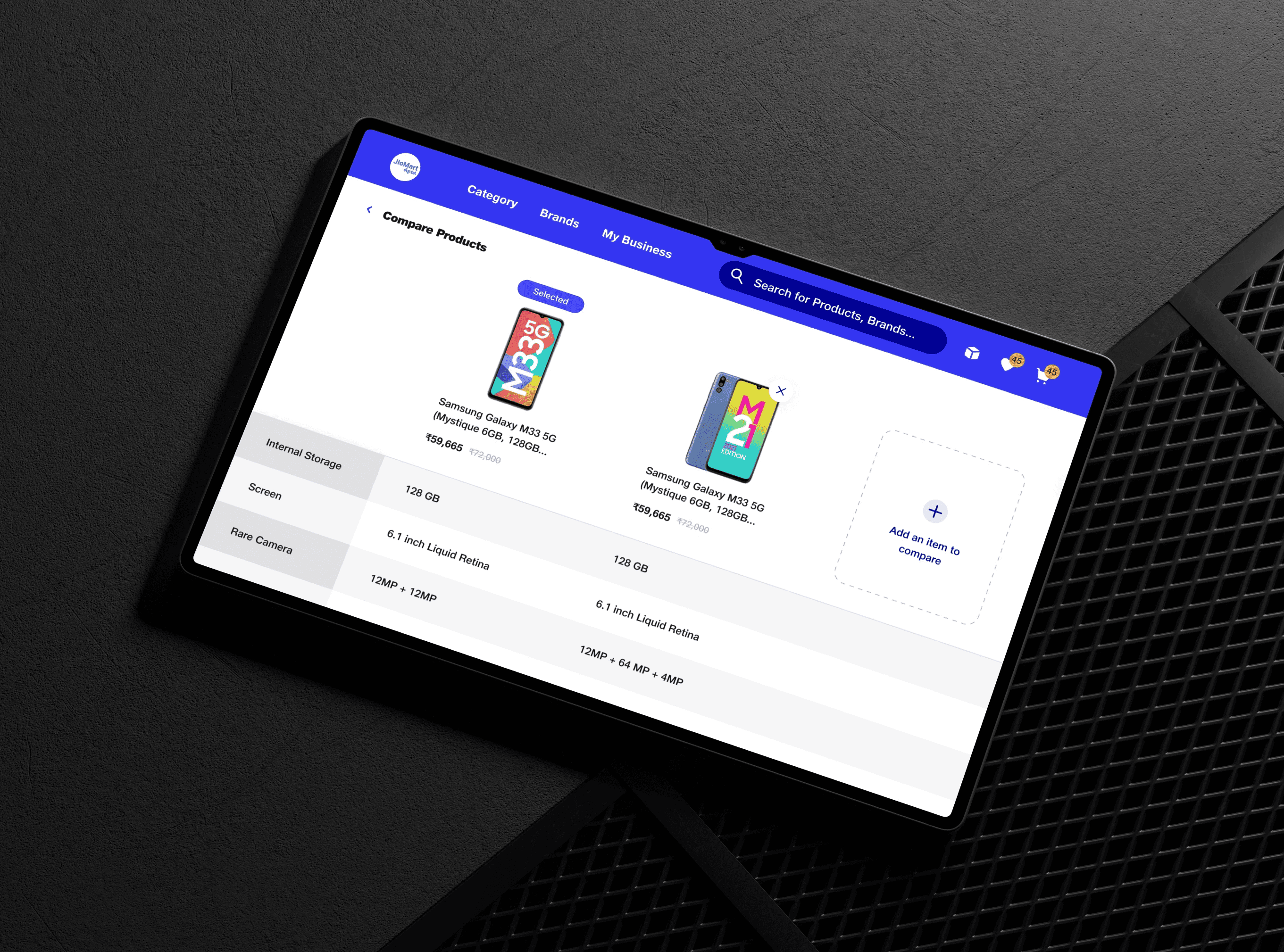
3) Frictionless Product Comparison Matrix
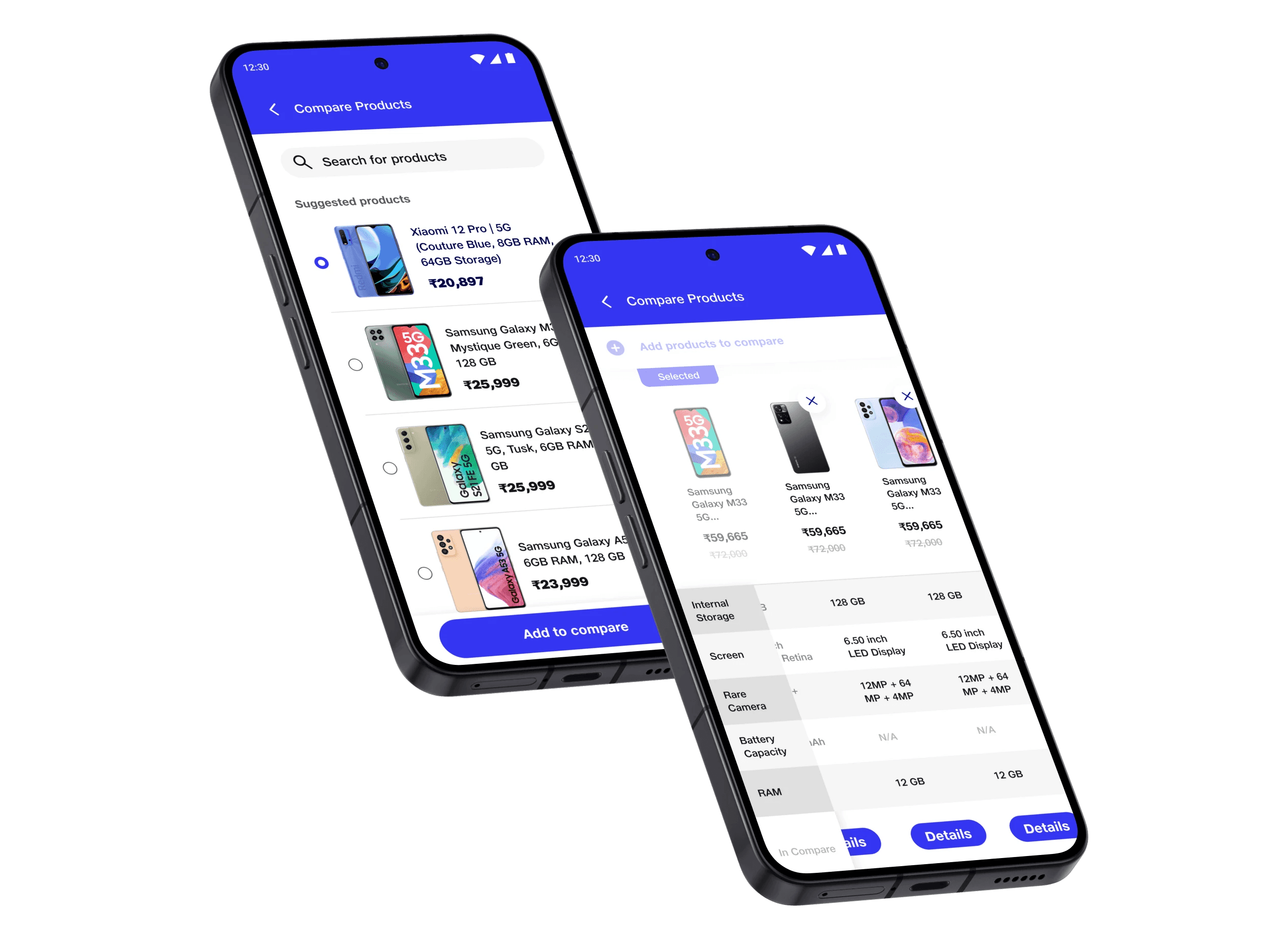
In B2B electronics, procurement decisions are strictly data-driven. Retailers need to evaluate dense technical specifications side-by-side to ensure they are buying the most competitive inventory for their local stores.
The Execution: I designed a robust, horizontally scrollable comparison matrix optimized for mobile. By utilizing a sticky attribute column (Storage, Camera, RAM), buyers can seamlessly scan complex specs across multiple devices without losing context.
Seamless List Building: To remove friction from the evaluation process, I paired the matrix with an intuitive “search-and-add” flow featuring smart product suggestions, allowing retailers to build and modify their comparison lists instantly.
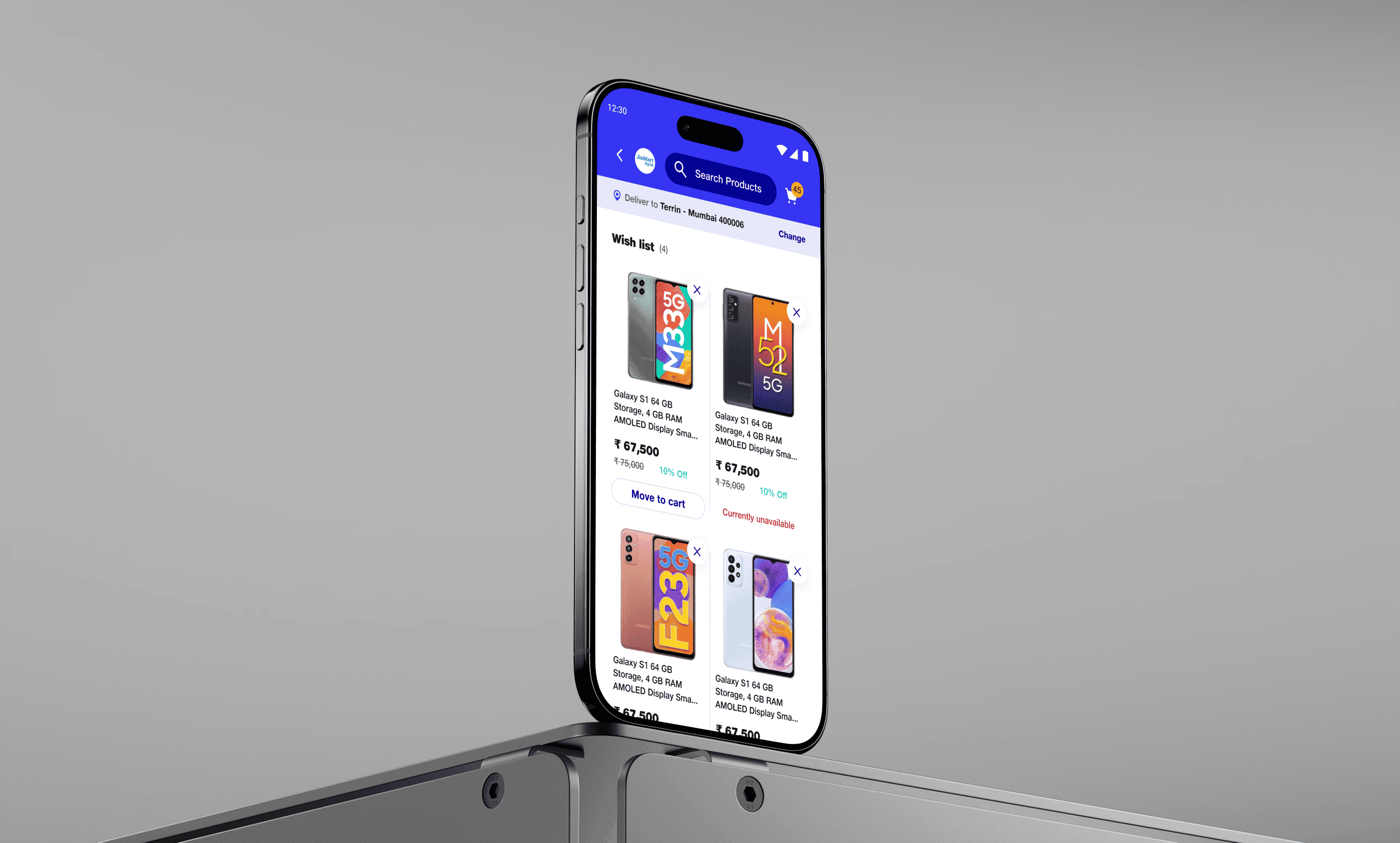
4) Enforcing fulfilment integrity (The Cart Blocking Rule)
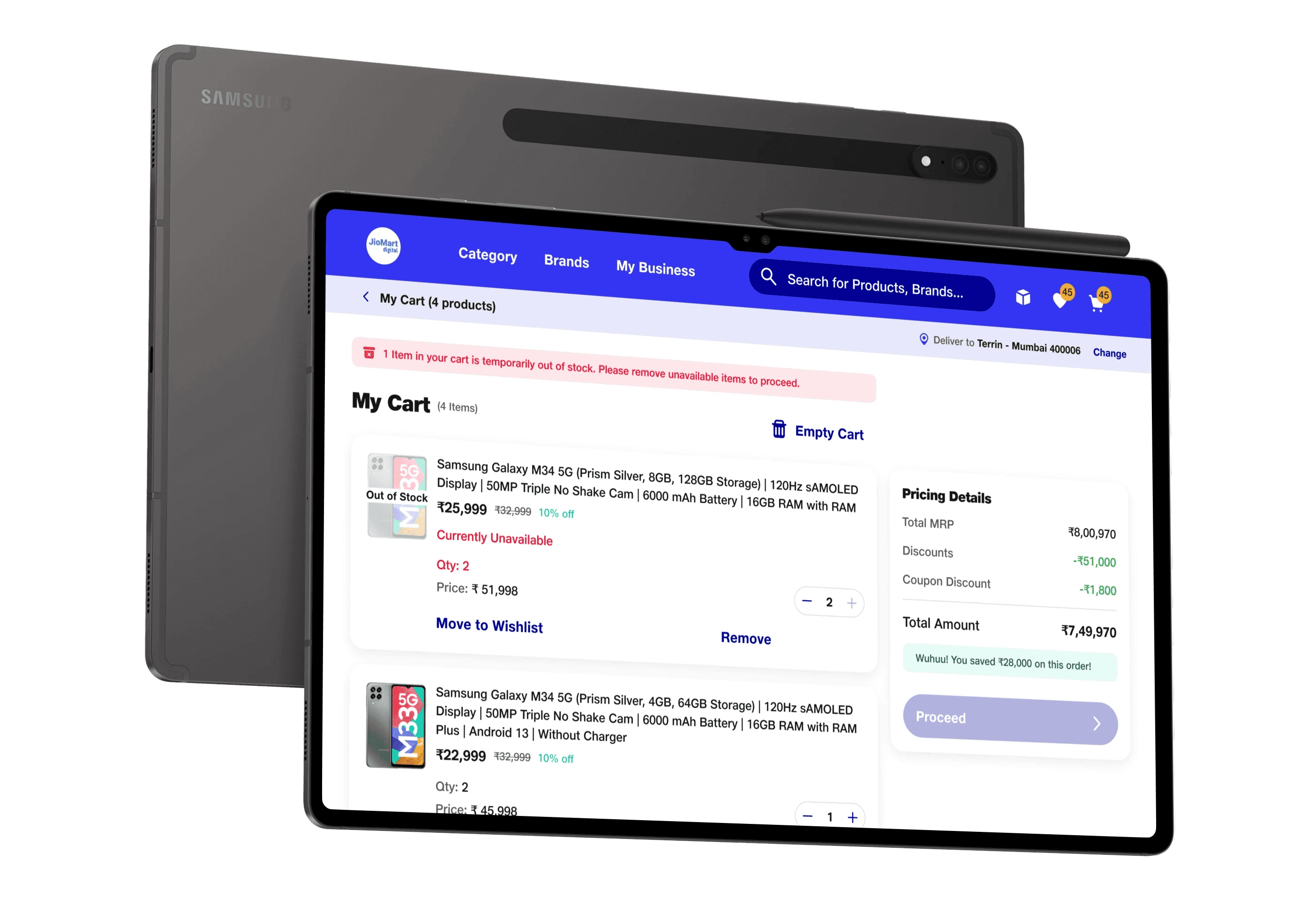
When inventory changes rapidly, teams often try to “let checkout proceed” and resolve it later. This can move inventory-conflict resolution into post-order operations.
The Trade-off: I intentionally chose a harder rule. If an item is temporarily out of stock, the cart shows a clear error (“1 Item is temporarily out of stock”) and blocks checkout until it’s resolved. The trade-off was an additional checkout step in exchange for resolving unavailable items before placing the order.
5) Separating “Shopping Identity” from “Business Identity”
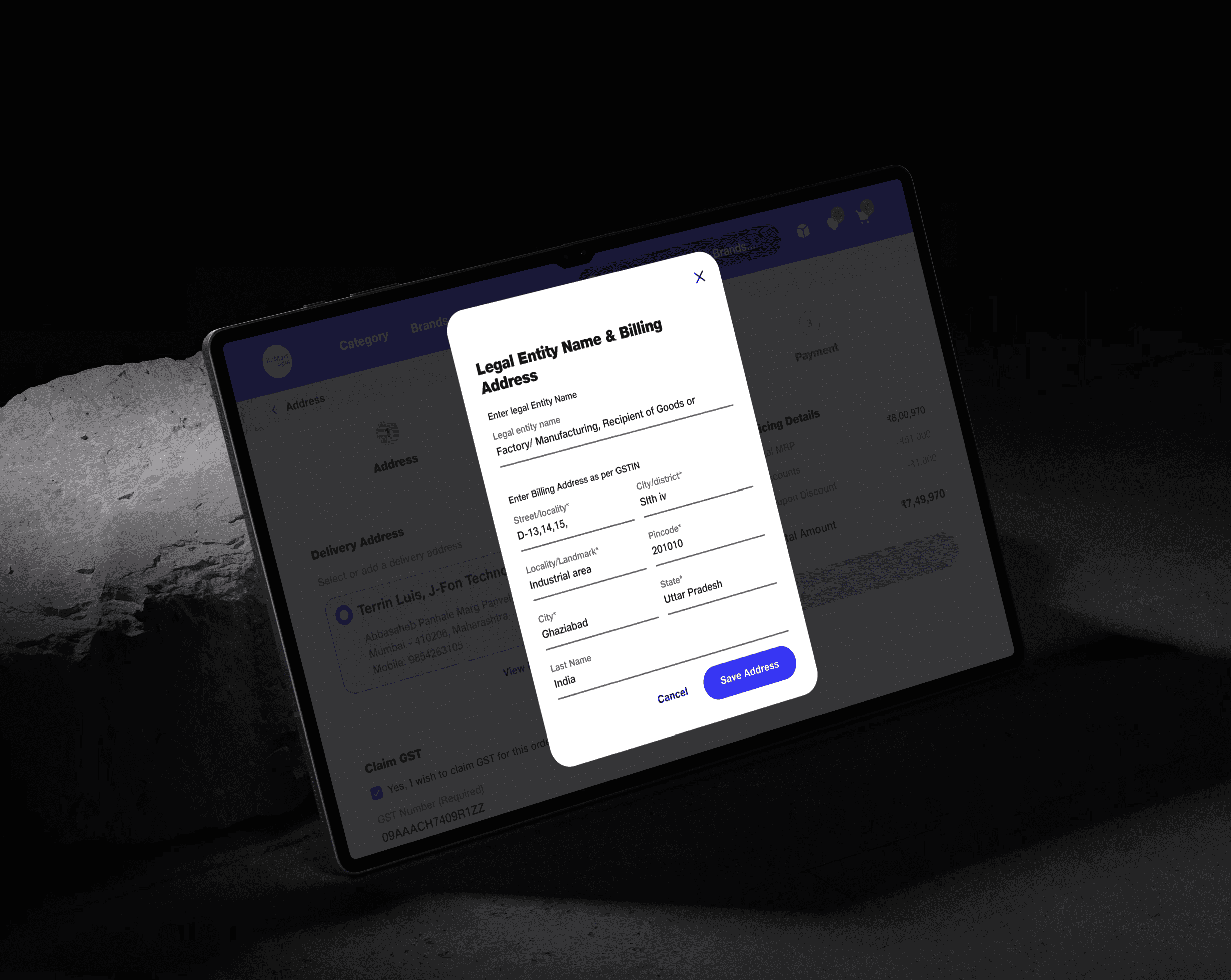
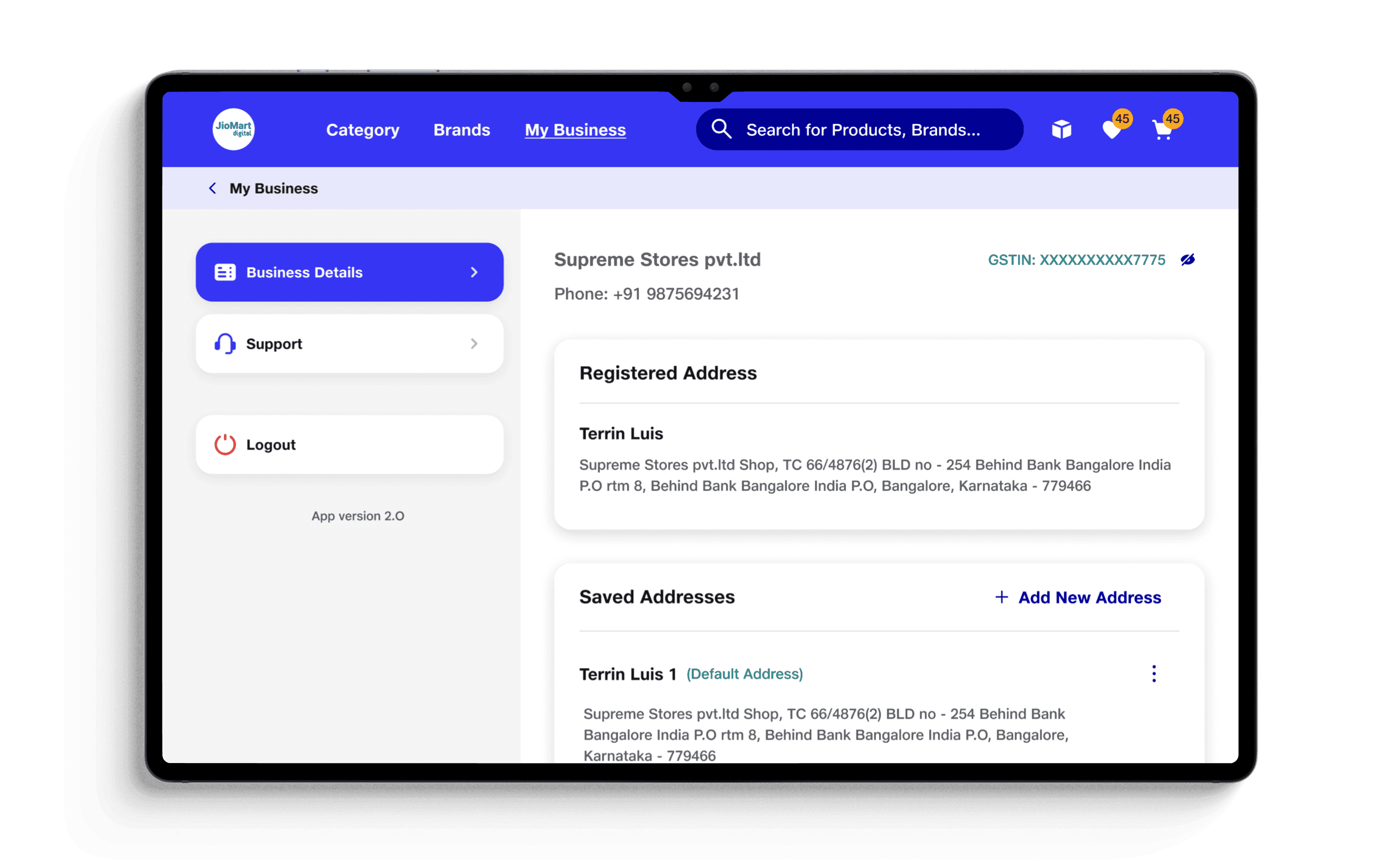
B2B ordering requires accurate business, billing and address details. I designed a dedicated My Business area to make operational data explicit.
Tablet Master-Detail Architecture: I designed a dedicated split-pane architecture for tablets (the primary device used at store counters) so retailers could review registered business details, copy GSTINs and manage default addresses.
6) Post-order ops as part of the product, not an afterthought
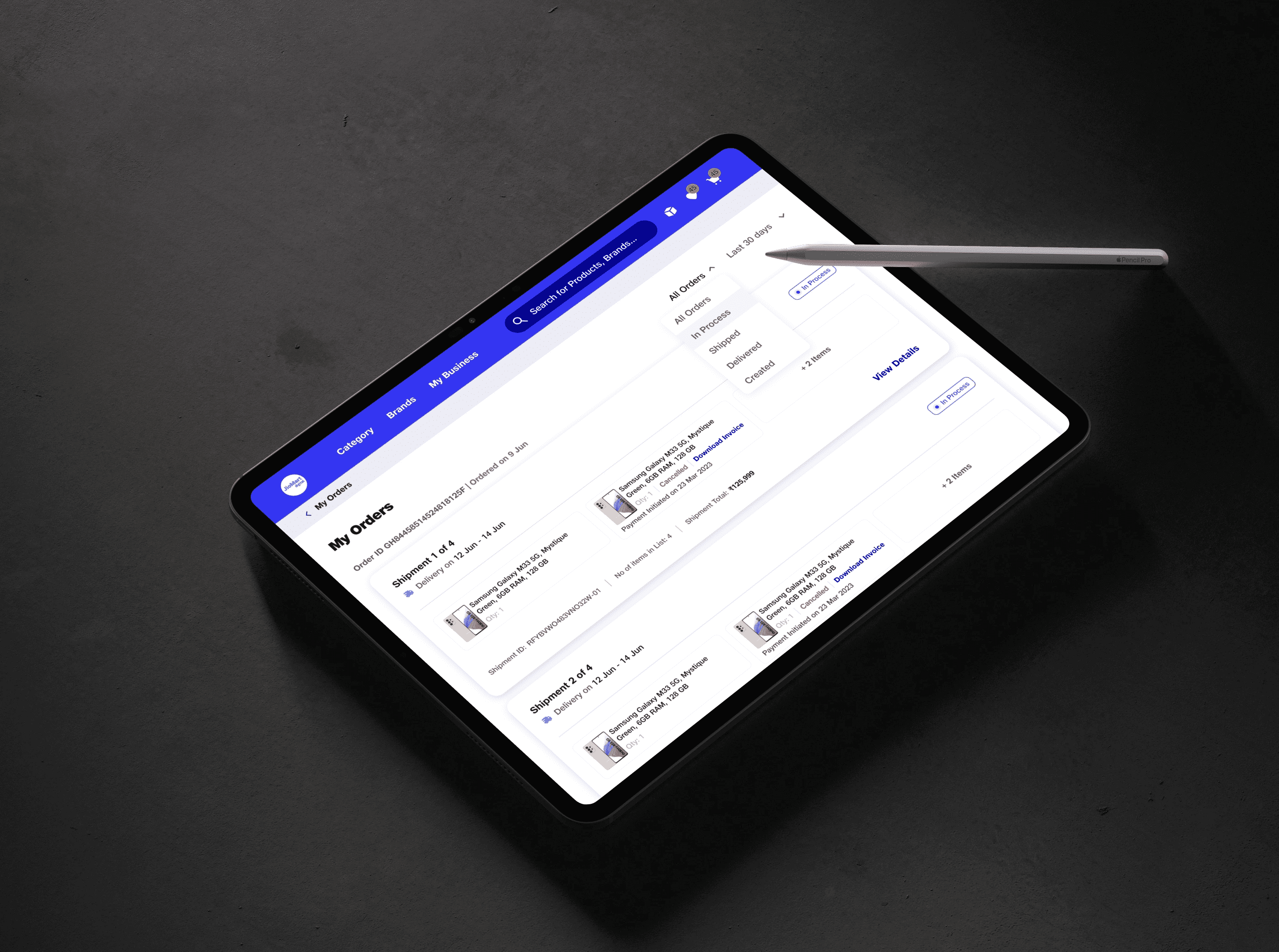
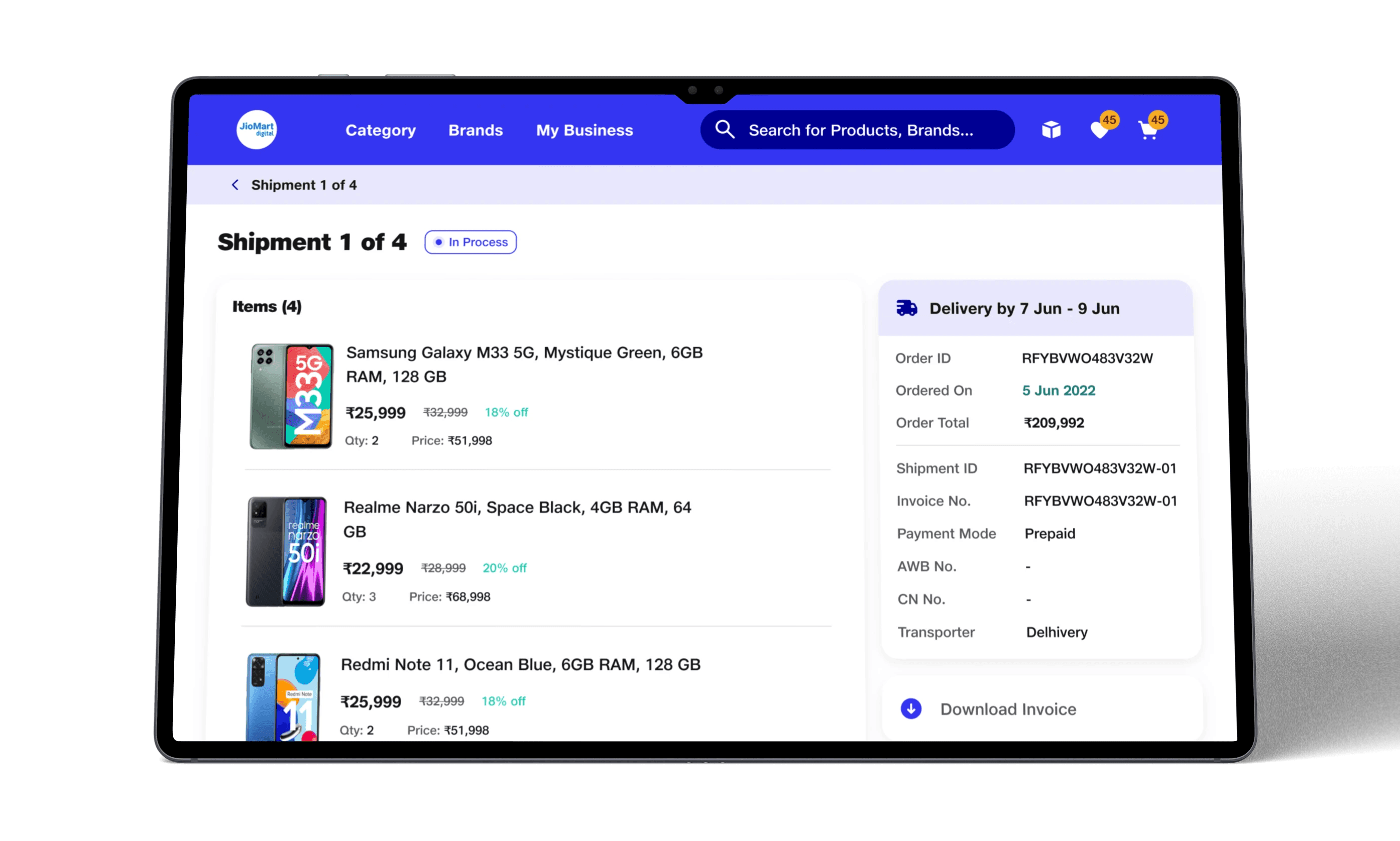
In B2B, trust is won after the checkout. I treated the Orders screen as a critical control surface.
The Execution: I designed order-status filters—Created, In Process, Shipped and Delivered—and visible invoice downloads so retailers could check progress and access invoices in the app.
Constraints & Trade-offs
Inventory Volatility: Real-time inventory isn’t free. Backend latency and sync issues forced me to design exceptionally strong error states and re-validation points across the cart.
Cross-device Parity: The Tablet UI required entirely different density, layout, and ergonomic spacing while keeping the core mental models perfectly consistent with the Mobile app.
Multi-category Catalogue: Faceted filters had to scale across wildly different electronics categories without breaking the UI.
Business scale & design contribution
JioMart Digital B2B successfully bridged the gap between Reliance’s massive wholesale inventory and the localized reach of mom-and-pop stores.
Revenue context: JMD B2B reported ₹381.5 Cr in revenue for June 2024, according to the internal business update posted on 3 July 2024. This later business-scale figure does not isolate the financial effect of my design.
Retailer scope: I designed the mobile and tablet procurement experience for 3,000+ electronics retailers.
Operational design: The experience made bulk ordering, stock conflicts, business details, order status and invoice access explicit within the procurement flow.
What to improve next
Proactive “Stock Risk” Warnings: Surface low-stock indicators earlier (on the PDP/PLP) to reduce hard blocks at the cart level.
Smarter Bulk-Buy Shortcuts: Introduce quick-add bundles and saved order templates for recurring inventory purchases.
Role-Based Access: Create distinct app experiences for multi-user retailer teams (e.g., Store Owner vs. Floor Staff).
I’d prioritise earlier stock-risk warnings on the PDP. The cart-blocking rule resolves unavailable items before checkout, but surfacing that information earlier could help retailers avoid reworking their order.