Design
AI didn't expose bad design. It exposed designers who were hiding behind process.
The double diamond didn't produce good design. It produced the appearance of rigour. AI can do that in seconds.
The design review had gone perfectly.
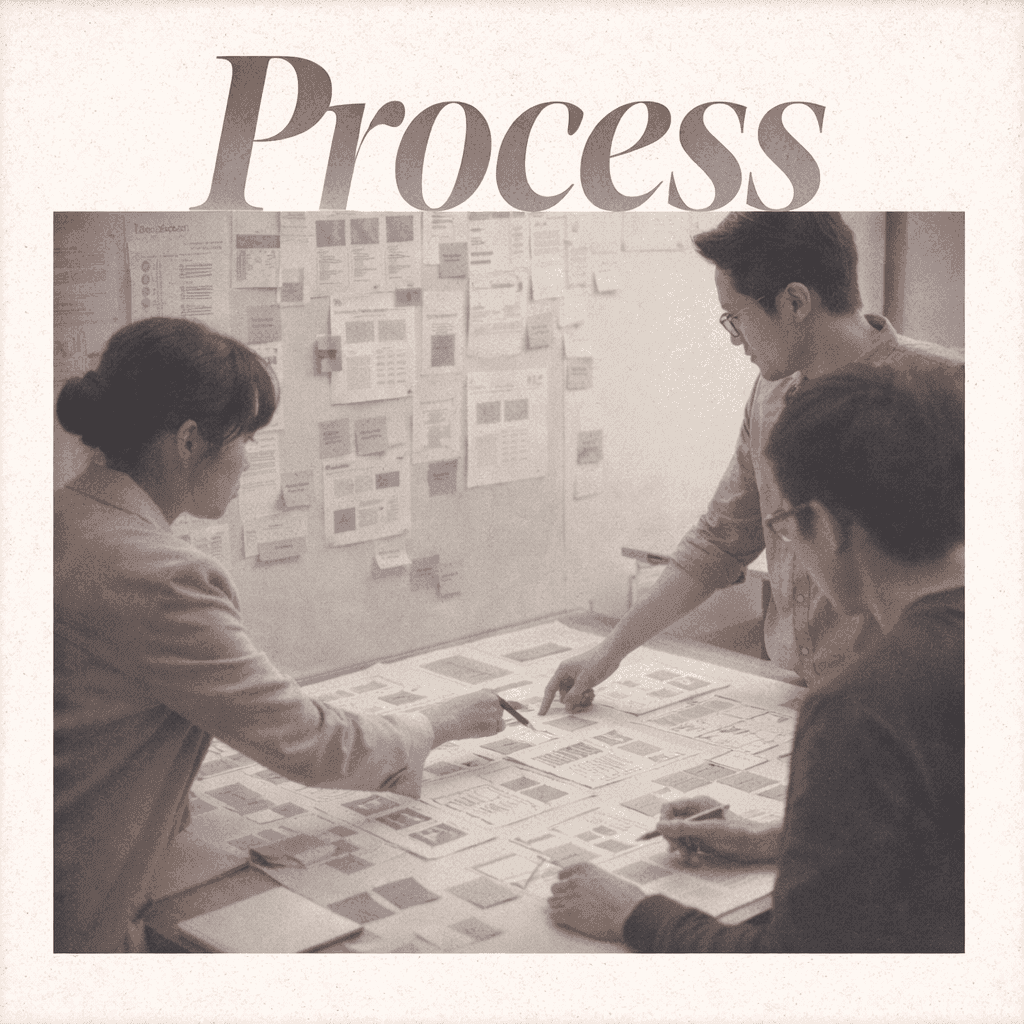
The junior designer had run the full process. Discovery interviews, affinity mapping, a journey map that covered an entire wall, a clearly documented problem statement, a prioritised list of opportunity areas. The presentation was confident. The slides were clean. Every decision traced back to a research finding.
The design missed the point entirely.
Not in a small way. In the way that reveals a fundamental misunderstanding of what the product actually needed to do — a misunderstanding that three weeks of process had not surfaced, because the process was never designed to surface it. The process was designed to look like thinking. It had succeeded at that. It had failed at everything else.
I gave the feedback, we reframed the problem, and the right direction emerged in about forty minutes of conversation. Forty minutes that could have happened at the start.
That review is the clearest example I have of process theatre. And AI didn't create that problem. It just made it impossible to keep hiding behind.
What process theatre is and how it became endemic
Process theatre is the performance of design rigour without the substance of design judgment. It's running a design sprint because design sprints are what serious design teams do. It's producing a journey map because journey maps demonstrate thoroughness. It's affinity mapping twelve interviews into clusters that everyone nods at and nobody uses.
None of these methods are wrong. Every one of them can produce genuine insight when applied with judgment. The problem is that design culture — particularly in the decade when design was professionalising inside tech companies — conflated the execution of method with the exercise of judgment. Teams were evaluated on process compliance. Portfolios were structured around methodology. Job descriptions asked for "experience with design thinking."
The implicit promise was: if you run the right process, good design will emerge. It won't. Good design emerges from judgment — from knowing which constraint matters most, which research finding to trust, which stakeholder is solving the wrong problem, when to stop gathering data and make a call. Process creates the conditions for judgment. It is not a substitute for it.
Design culture obscured this distinction for long enough that an entire generation of designers learned to invest in process fluency rather than decision-making confidence. Not out of laziness — out of rational response to the incentive structure they were trained inside.
Then AI arrived and could run the process in seconds. And suddenly the distinction that had been obscured for a decade was visible to everyone.
What AI specifically revealed
AI can do the steps. It cannot do the judgment.
It can generate a journey map. It cannot tell you which part of the journey is actually the problem. It can produce fifty design variations. It cannot tell you which one is right for this user, this constraint, this moment in the product's evolution. It can write a research synthesis. It cannot tell you which insight changes the direction and which insight is noise.
What AI revealed is precisely the gap between executing a method and exercising judgment — because AI closed the first gap entirely and left the second completely untouched.
At Fynd, AI-assisted prototyping compressed a workflow that previously took weeks into 48 hours. The Pizza Hut Malaysia pitch — 150 screens in two days, presented as a working prototype — helped secure an engagement with $5M potential value. What made that compression possible wasn't that process steps were skipped. It was that judgment was already sharp enough that the process steps weren't load-bearing. We knew which flows mattered. We knew which edge cases to design first. We knew which decisions were reversible and which ones had to be right. The AI handled the production. The judgment was already there.
The designers on my team who thrived with AI tools had one thing in common: they were fast decision-makers. They could look at three AI-generated options and immediately identify which one was directionally correct and why. The AI gave them leverage. Their judgment gave them direction.
The designers who struggled had a different profile. They were excellent at running process. They were uncertain about calling something right or wrong without a research finding to point at. AI didn't expose a skill gap — it exposed a confidence gap, which turned out to be the more fundamental one.
The skills that survived the compression test
When AI compressed the process, what remained was a short list.
Problem framing. The ability to look at a brief, a stakeholder conversation, or a set of requirements and identify what's actually being asked — which is often not what's literally stated. This is the skill that prevented three weeks of work from going in the wrong direction. AI cannot do it. It will frame the problem as given, execute on the frame, and produce coherent output for the wrong question.
Constraint hierarchy. Knowing which of the competing constraints is the real one. In the PRD alignment system at Fynd, the document was never the point. The point was the shared decision — the moment where PM, engineering, and design agreed on what edge cases were in scope before work began. AI can generate a PRD. It cannot determine which edge case the business can afford to get wrong. That call is a judgment about the business, the users, and the moment. It belongs to a human with context.
Stakeholder diagnosis. Knowing when a stakeholder is solving the wrong problem, when a brief reflects internal politics rather than user needs, when the stated requirement is a symptom of a deeper misalignment. This is one of the highest-leverage skills in design and one of the most underdeveloped — because process theatre gave designers permission to take requirements at face value and execute on them carefully.
The willingness to decide. This sounds obvious. It isn't. A significant portion of design process theatre exists specifically to defer the moment of decision — to gather one more round of feedback, run one more test, produce one more iteration. AI has made this strategy untenable. When the process can be executed in hours, continuing to run it is no longer defensible as thoroughness. It's avoidance.
What this means for how design teams should operate
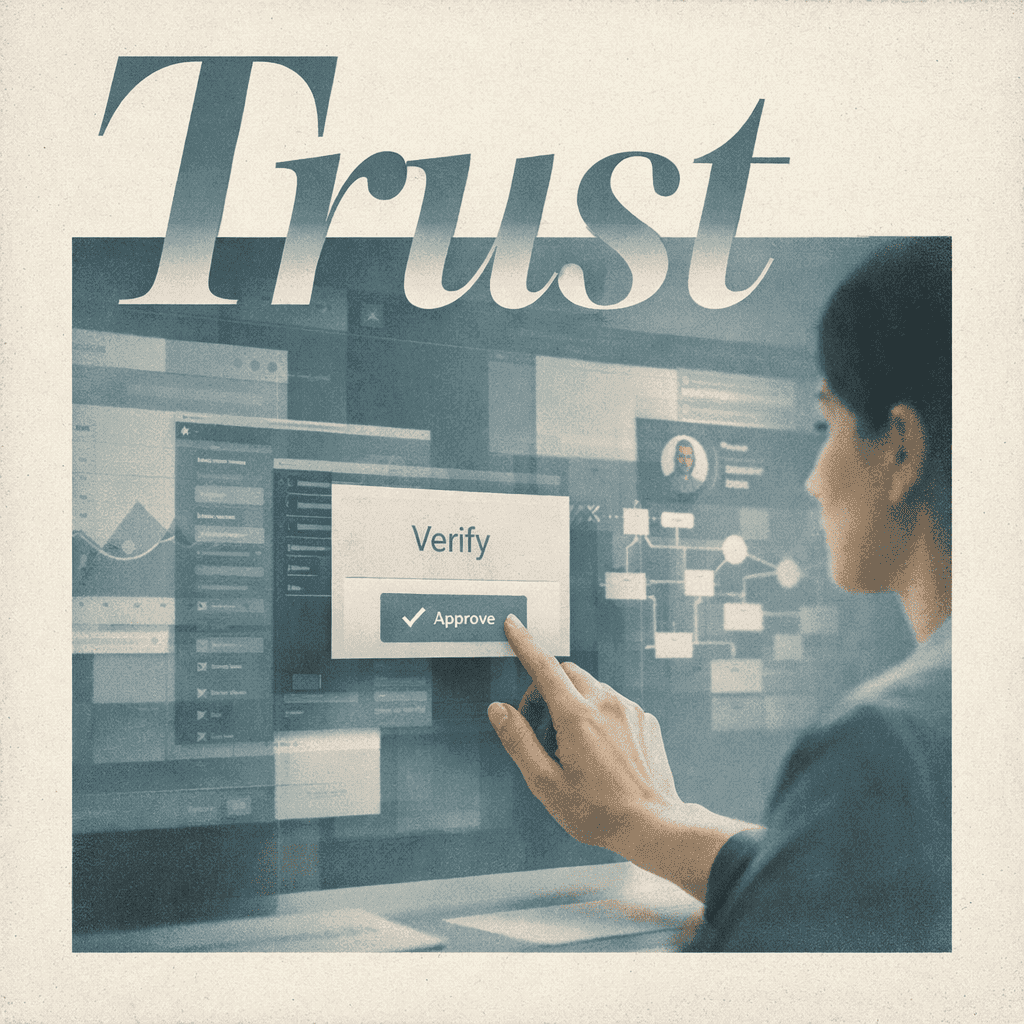
Hiring for process fluency is now a weak signal. A candidate who can articulate a rigorous double-diamond methodology has demonstrated that they understand how design is supposed to look. What they haven't demonstrated is whether they can make a call under ambiguity, push back on a brief that's wrong, or identify the insight that changes the direction.
The interview questions that matter now are the ones that expose judgment: Tell me about a time you told a stakeholder their requirement was wrong. What did you decide when the research was inconclusive? What would you have done differently if you'd had half the time?
Training should be structured around decision-making, not method execution. Critique sessions should focus on the decisions that were made, not the process that was run. The question "why did you make this call?" is more diagnostic than "walk me through your process."
Review structures need to surface judgment earlier. The moment where a designer's framing of the problem is examined should happen before three weeks of work, not after.
Close
Here's the question I now ask about every design process I observe: if a well-prompted AI ran this process, what would be different about the output?
If the honest answer is "not much," that's not an indictment of the designer's intelligence or effort. It's a signal that the process is doing the work that judgment should be doing — and that when the process is done, there's no judgment left to show.
AI didn't expose bad design. It exposed the places where designers had learned to hide inside process rather than make decisions.
The ones who aren't hiding have nothing to worry about.